Backyard Refresh With River Rock, Pavers, and Custom Plantings
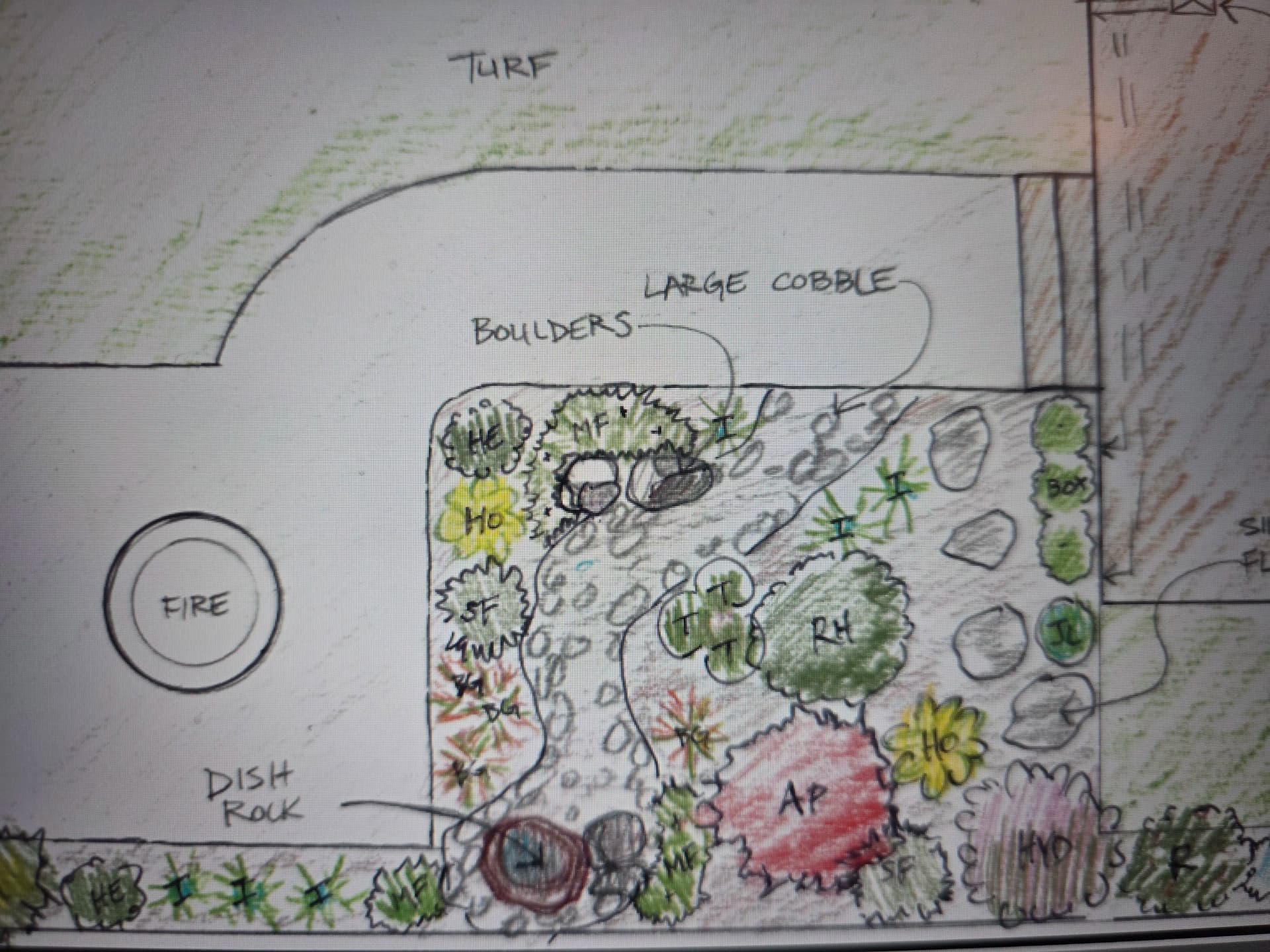
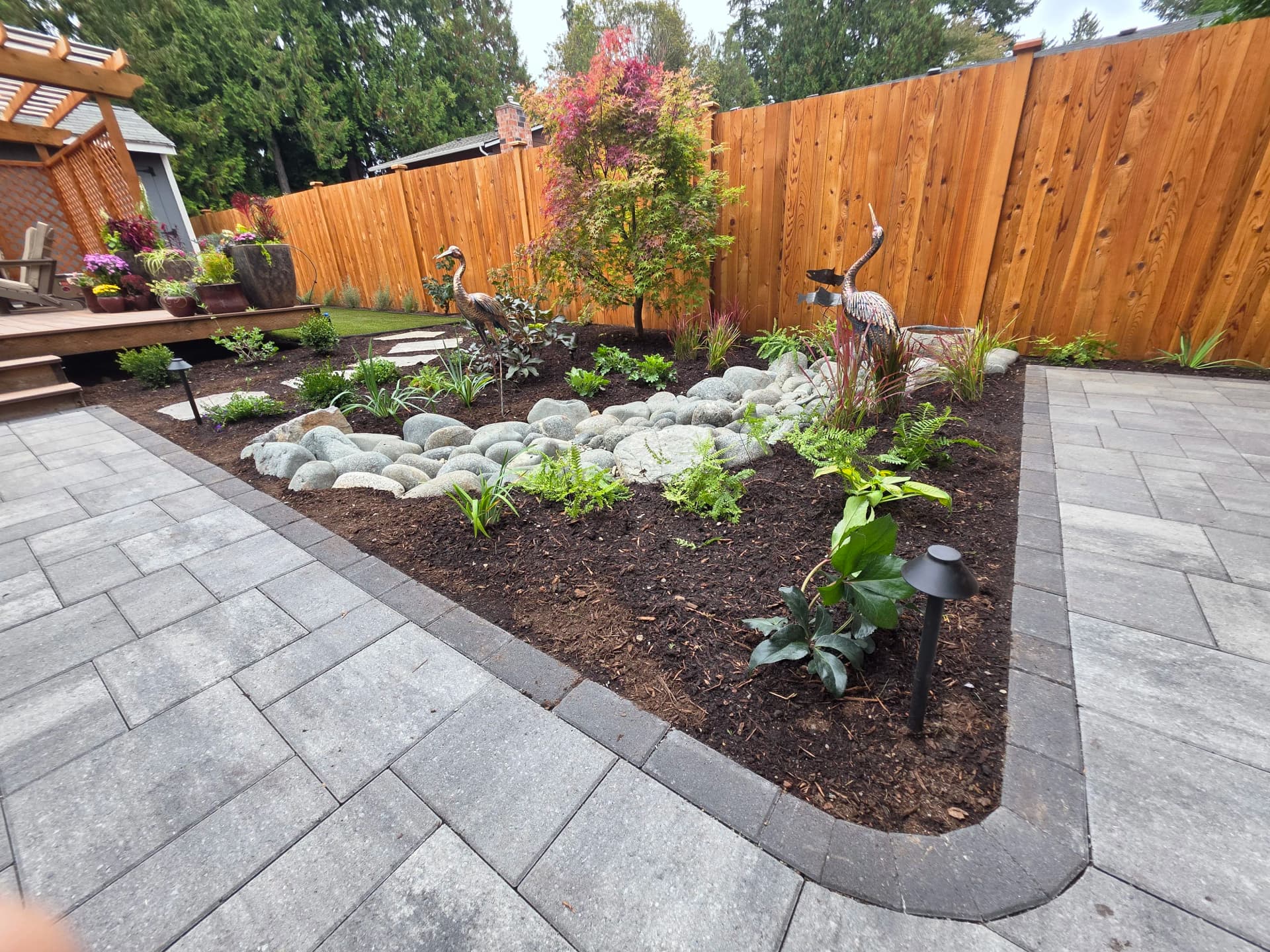
Some backyards have good bones - they just need someone with a real plan to pull it all together. That's exactly what this job was. The homeowner had the space. They just didn't have a cohesive design that made it feel like somewhere worth spending time. We started with a hand-drawn landscape plan that mapped out every element before a single plant went in the ground.
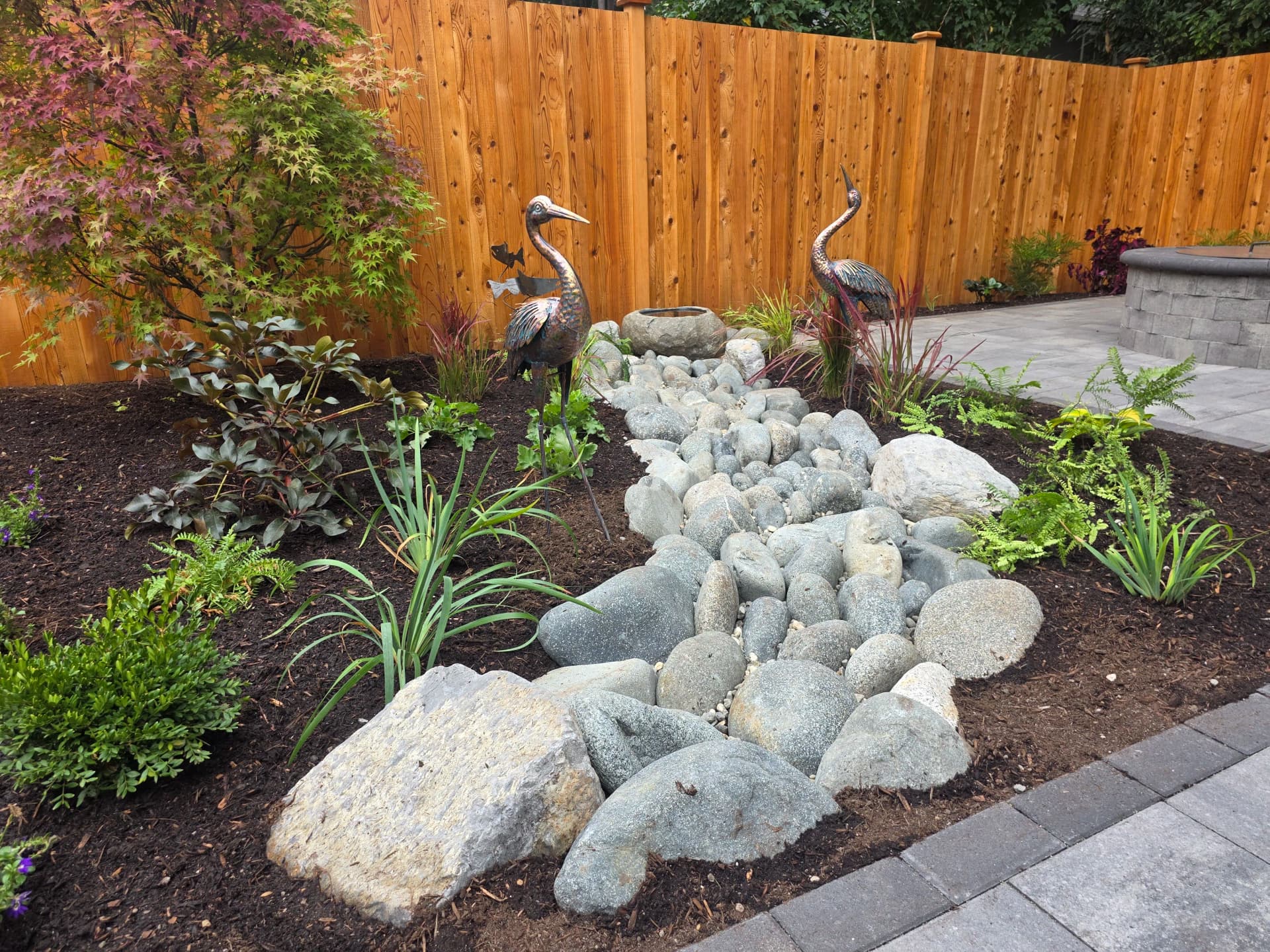
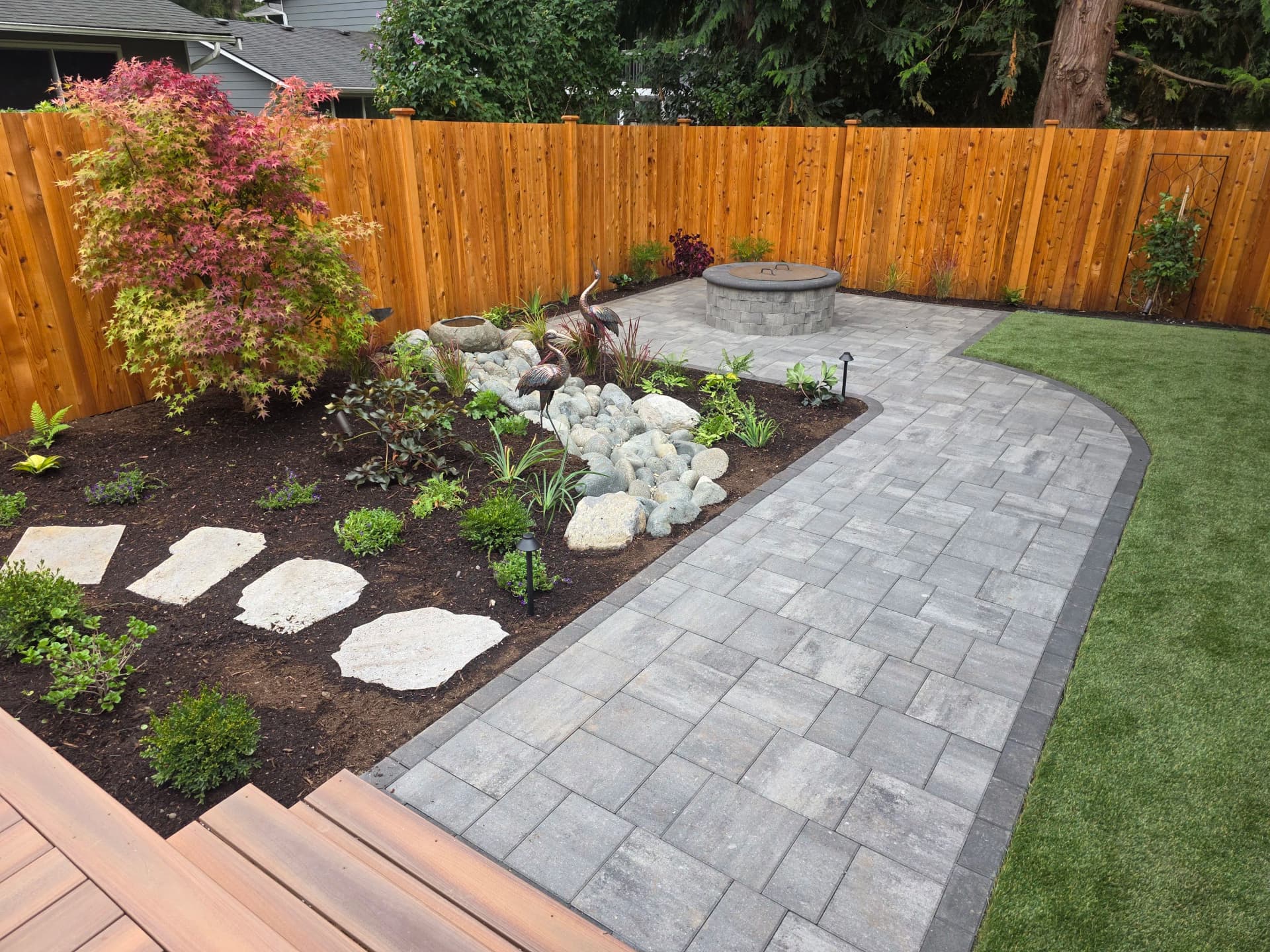
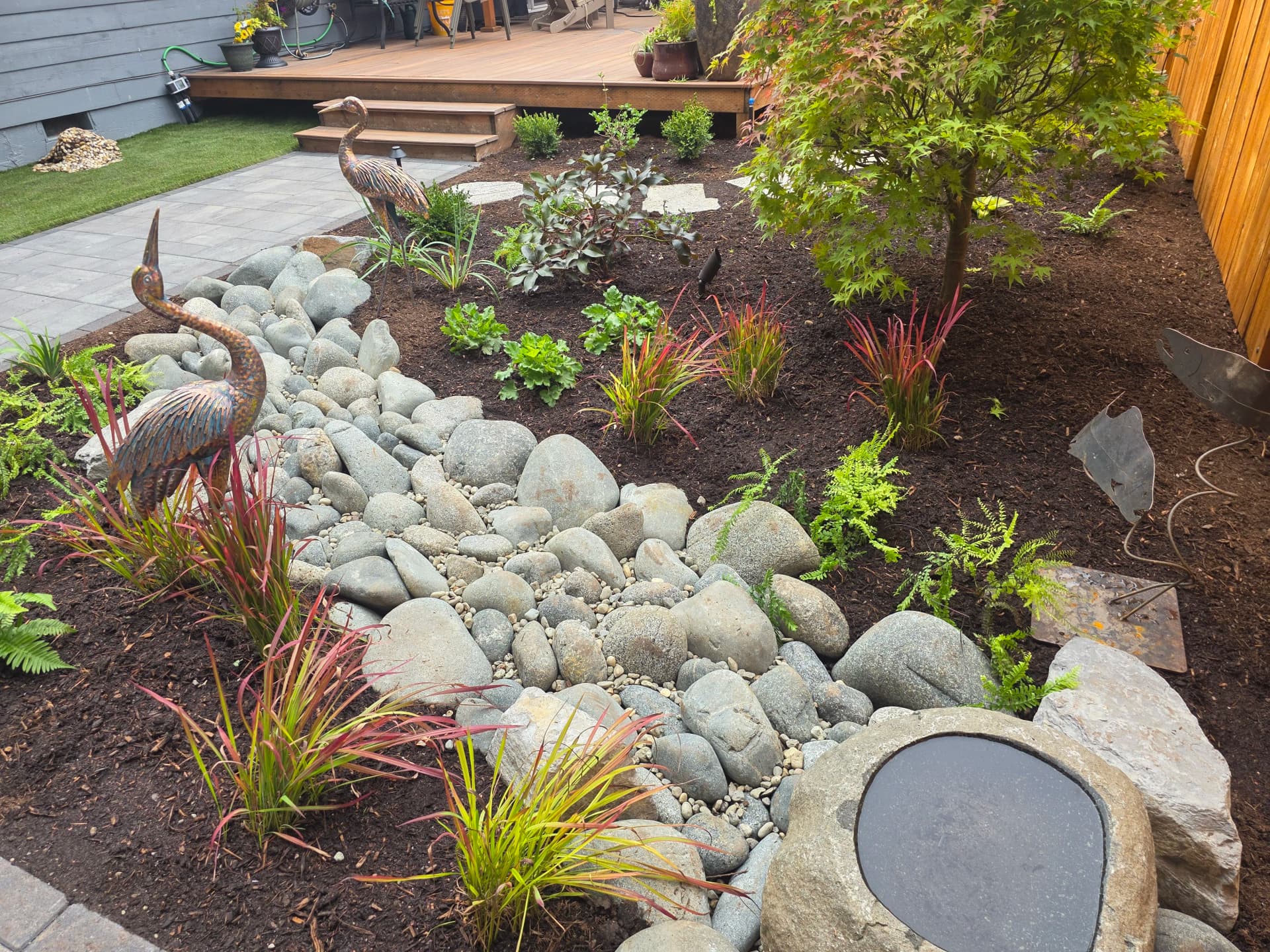
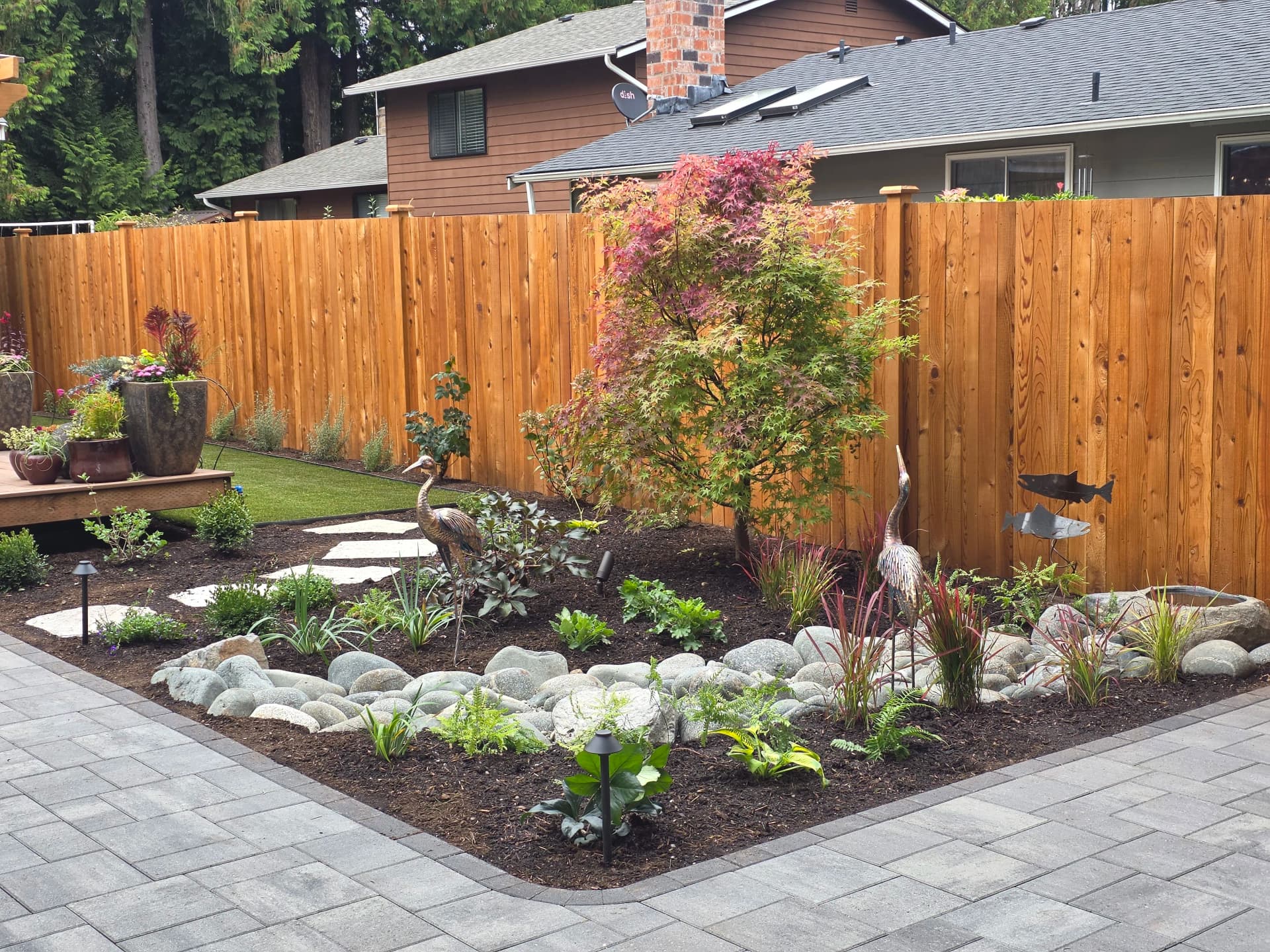
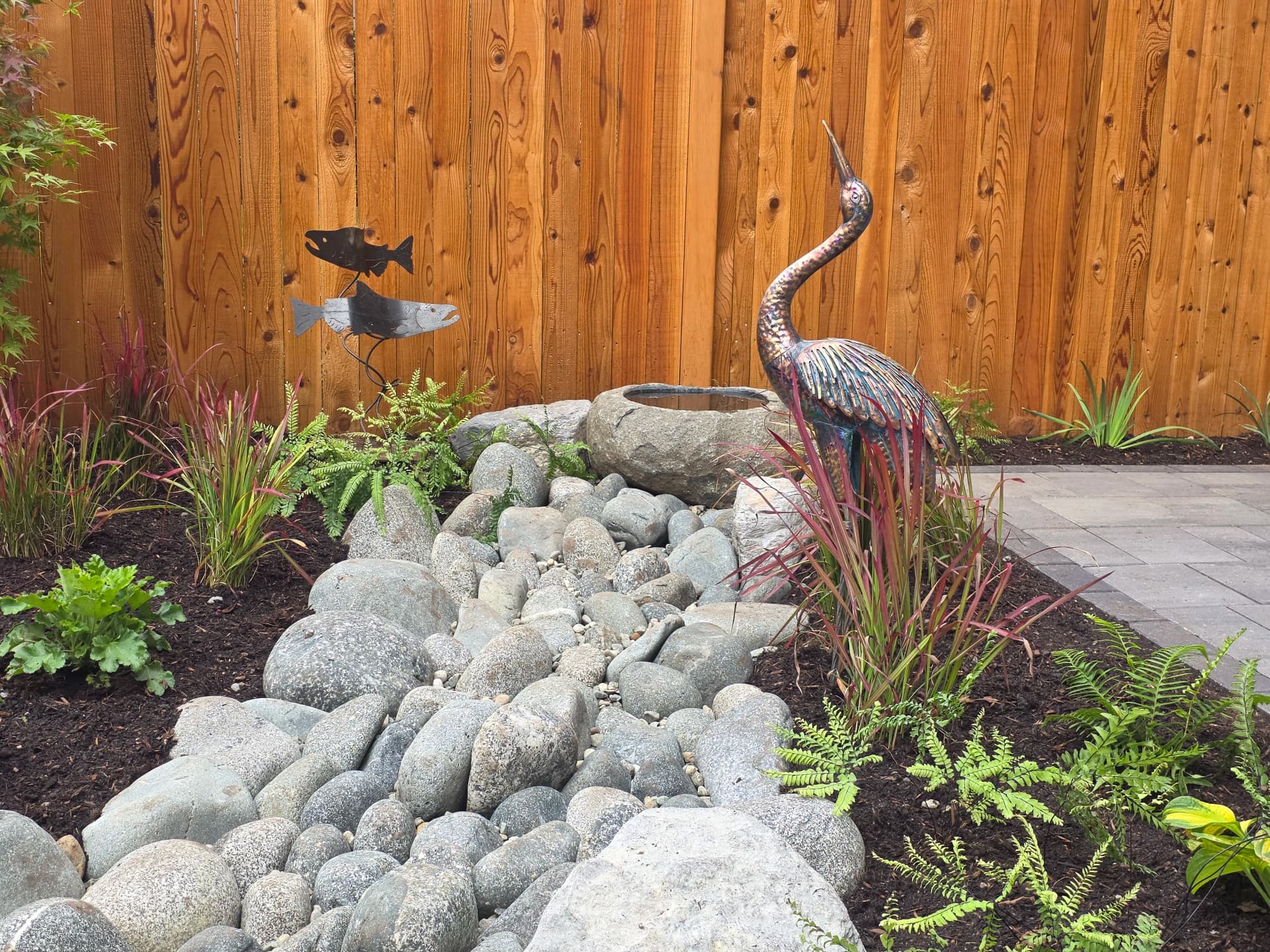
The centerpiece of the planting bed is a dry river rock stream built with large cobble, rounded boulders, and a stone dish feature. It gives the space visual movement and texture without needing any water or maintenance. Surrounding it, we planted a mix of ferns, ornamental grasses, Japanese maples, and colorful perennials - all chosen to complement each other through texture and color contrast. Red-toned grasses punch against the deep green ferns. It's not random. Every plant has a place.
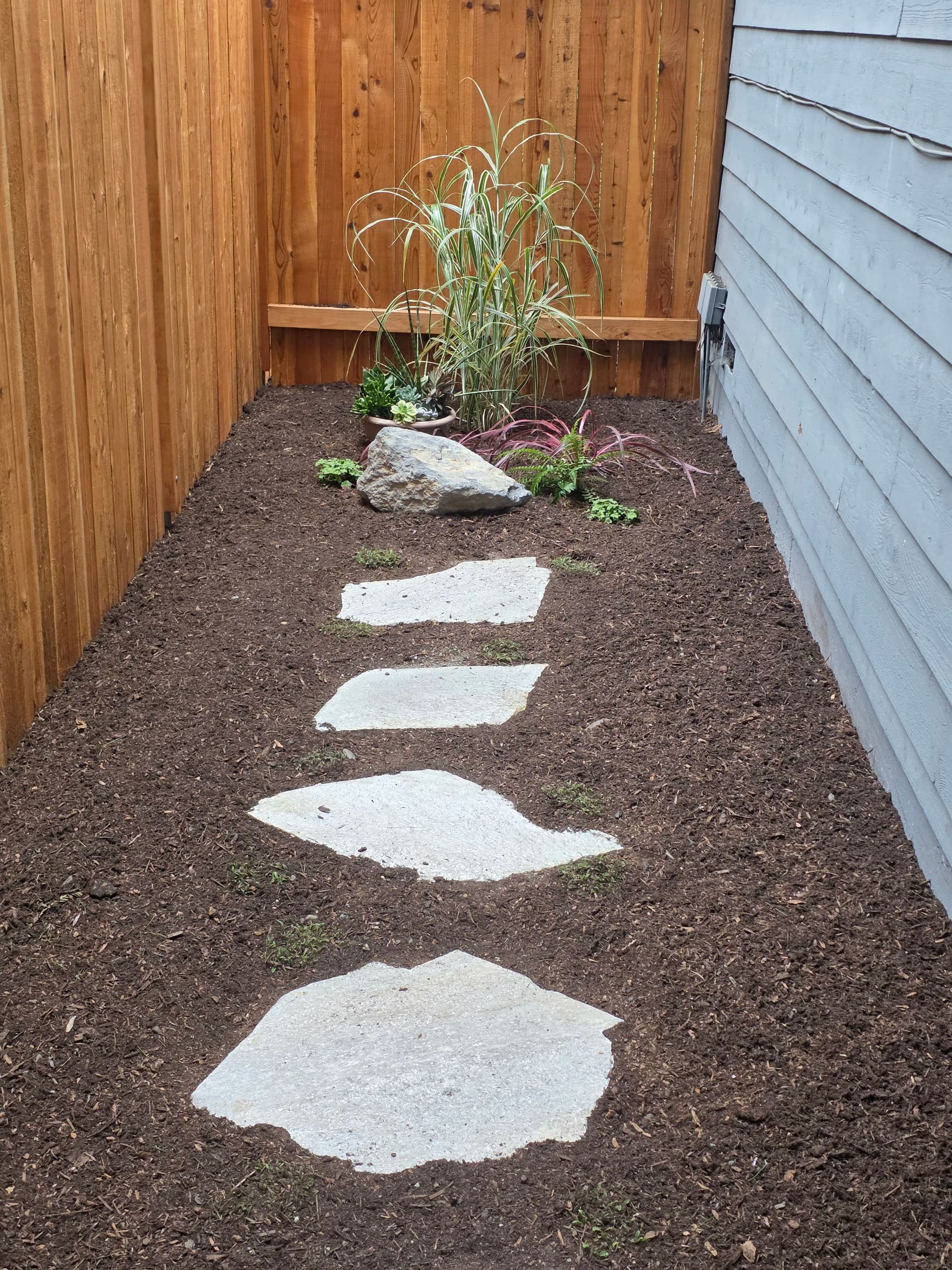
The hardscape ties everything together. A curved paver pathway and patio surface runs through the yard and connects the deck to the fire pit area on the far end. Flat natural stone steppers were set into the planting bed and along the side yard passage to keep foot traffic off the mulch without interrupting the design. Low-profile landscape lighting fixtures were placed throughout to make the space usable after dark. None of it feels like an afterthought.
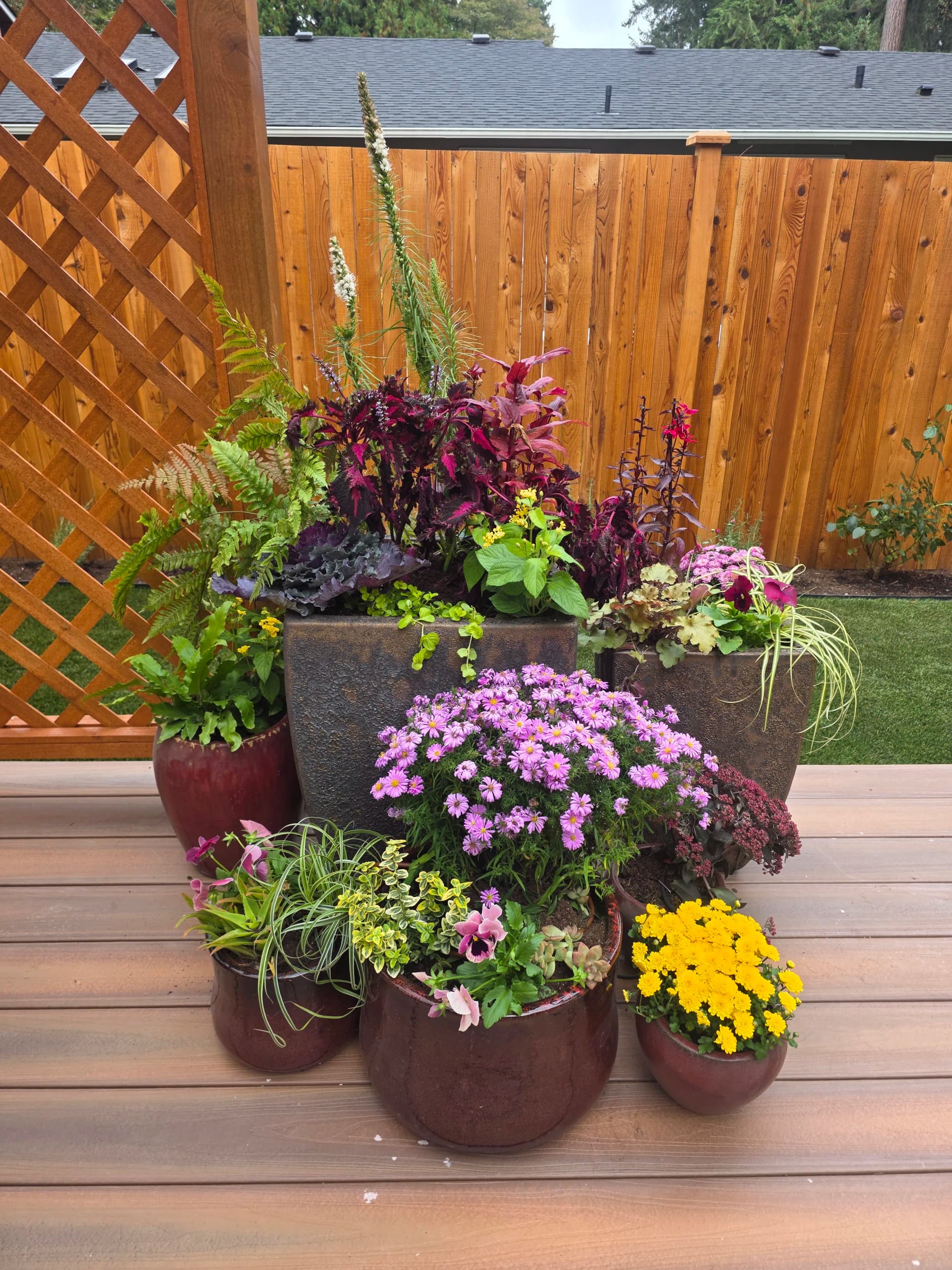
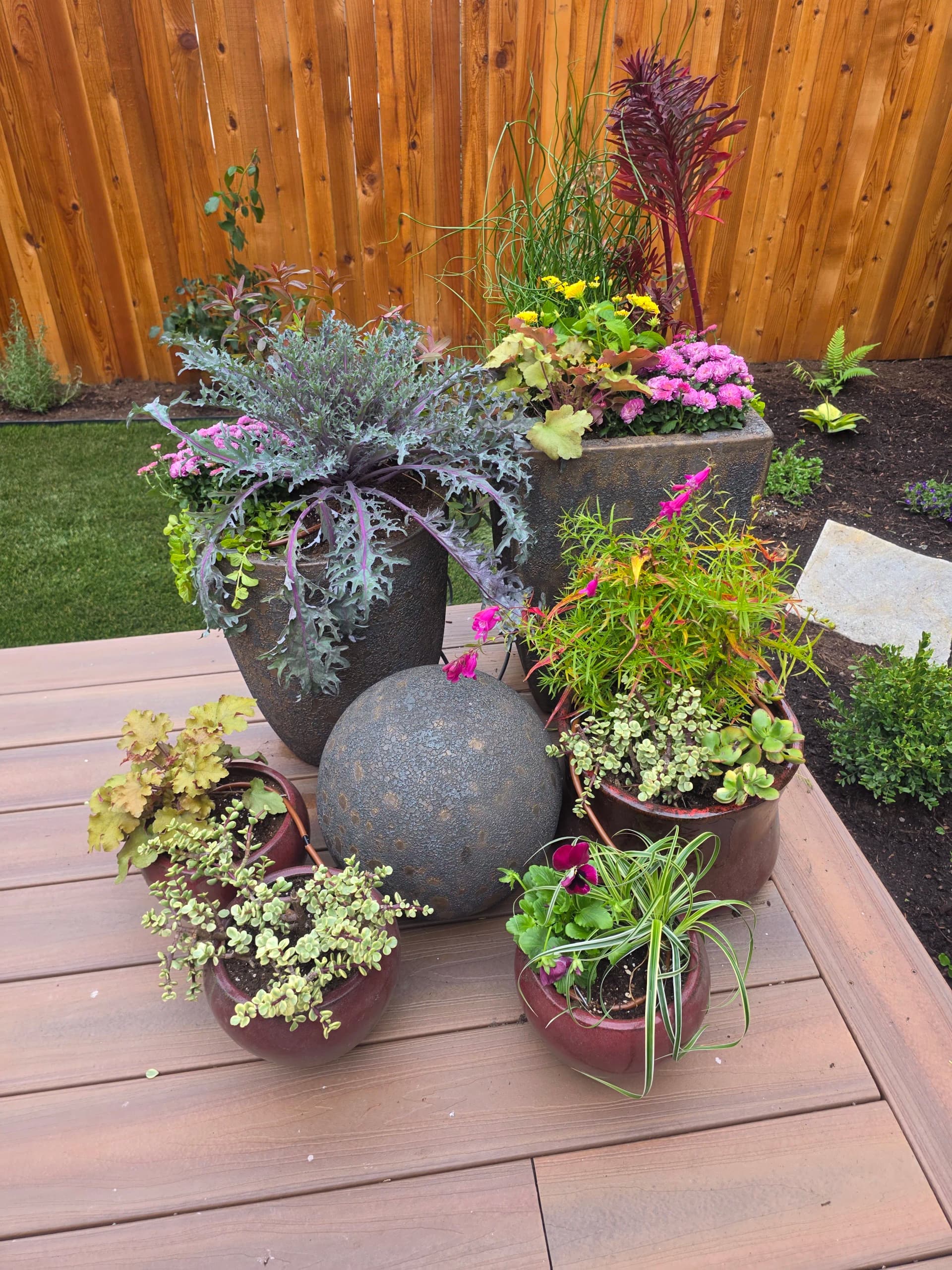
On the deck, we finished off the space with a grouping of planted containers - layered tall-to-short with a mix of seasonal bloomers, trailing plants, ornamental kale, and a concrete sphere accent. It's the kind of detail that makes a deck feel finished rather than just functional. Container plantings like these are easy to rotate out, which means the deck stays looking fresh without a full redesign.
This is what a well-planned backyard refresh actually looks like. It's not one big dramatic feature - it's a lot of smaller decisions made well. Planting selection, stone placement, path routing, lighting position, container styling. When those pieces work together, the whole space earns its keep.