Drystack Ledgestone Wall and Stone Steps Into a Forested Yard
Some yards have slopes that just make you nervous. A steep, uneven path through a wooded area might be fine when you're young and sure-footed, but over time it becomes a genuine hazard - especially after rain or when leaves pile up. That was the situation here.
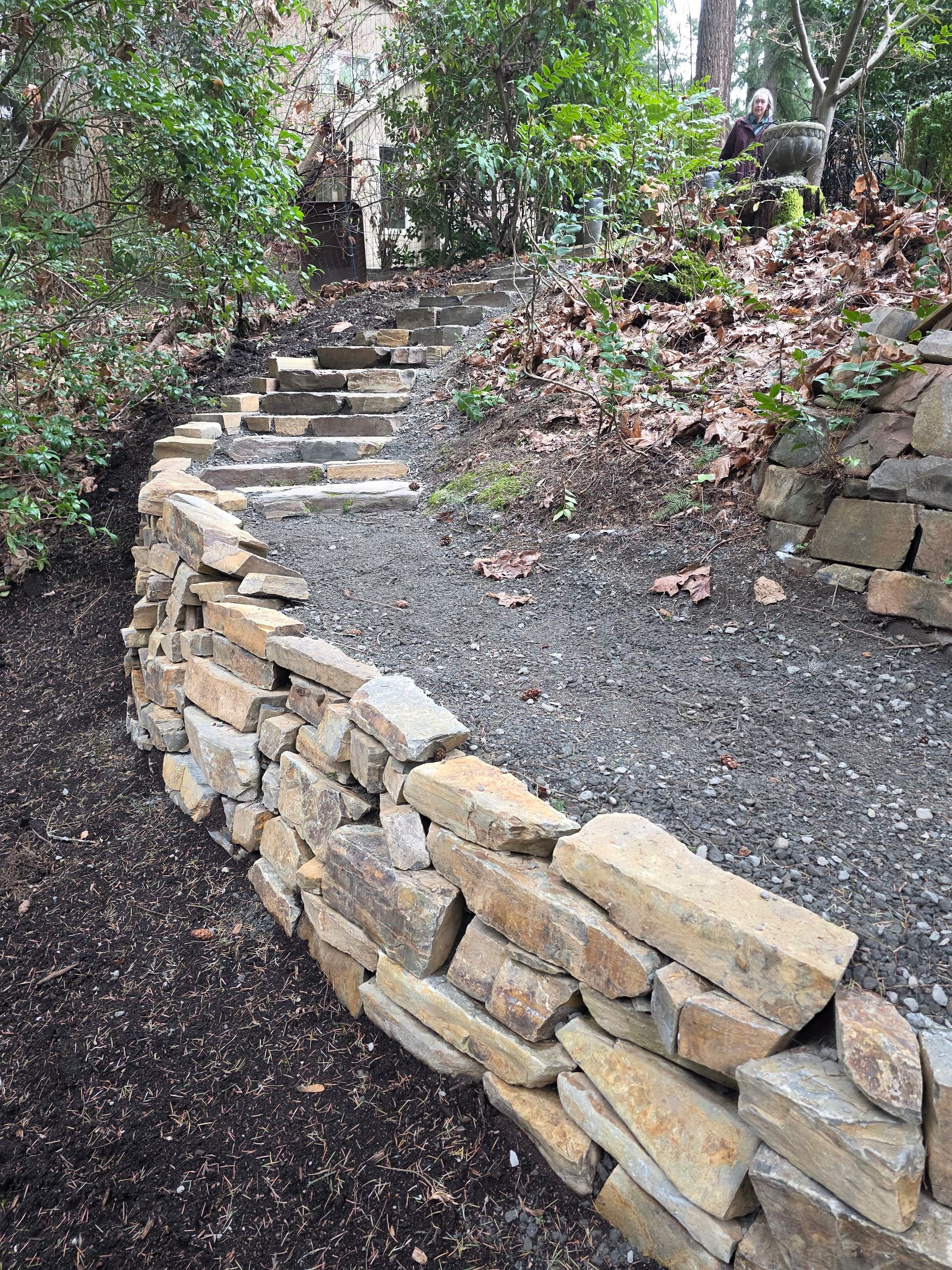
We rebuilt the entry path into this forested area from the ground up. The old route was steep and unpredictable, so we regraded the slope, set stone steps to break up the climb, and laid a gravel surface wide enough to actually feel stable underfoot. The drystack ledgestone retaining wall runs along the lower side of the path, holding the grade in place and keeping everything from washing out over time.
Drystack means no mortar - just carefully fitted stone. It's a technique that takes more time and skill than mortared work, but the result looks like it belongs in the landscape rather than being dropped into it. The warm, sandy tones of the ledgestone sit naturally against the dark mulch beds and the surrounding trees. Nothing about it looks forced.
The steps themselves are solid and wide, with enough depth to walk up comfortably without feeling like you're scrambling. That's something a lot of step installations get wrong - rise and run matter as much as materials. Here, the whole path flows in a gentle curve from the lower landing up toward the wooded area above, which makes the grade feel much less intense than it actually is.
This kind of work sits right at the intersection of our stonework, walls, and paths and walkways services. It's not just about aesthetics - though this turned out sharp - it's about making a space usable and safe for the long term. Gravel drains well, stone holds, and a well-built wall doesn't need to be revisited every few years.