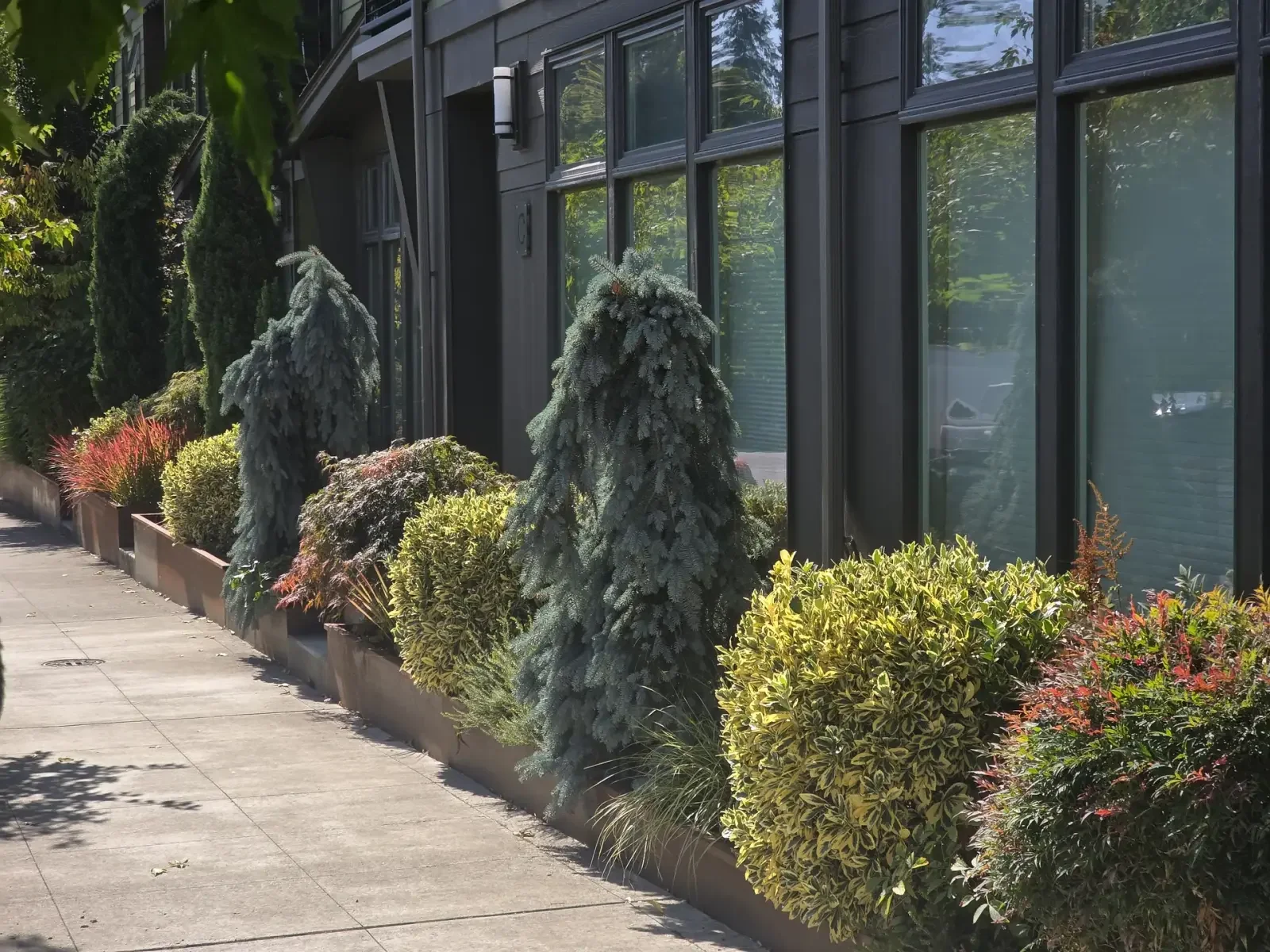
A lot of gardens end up in the same place: a handful of tired plants, bare patches in the beds, and containers that have not been replanted in years. That is what we were working with here. The goal was straightforward, which was to get the property looking full, healthy and intentional from the front bed all the way to the back.
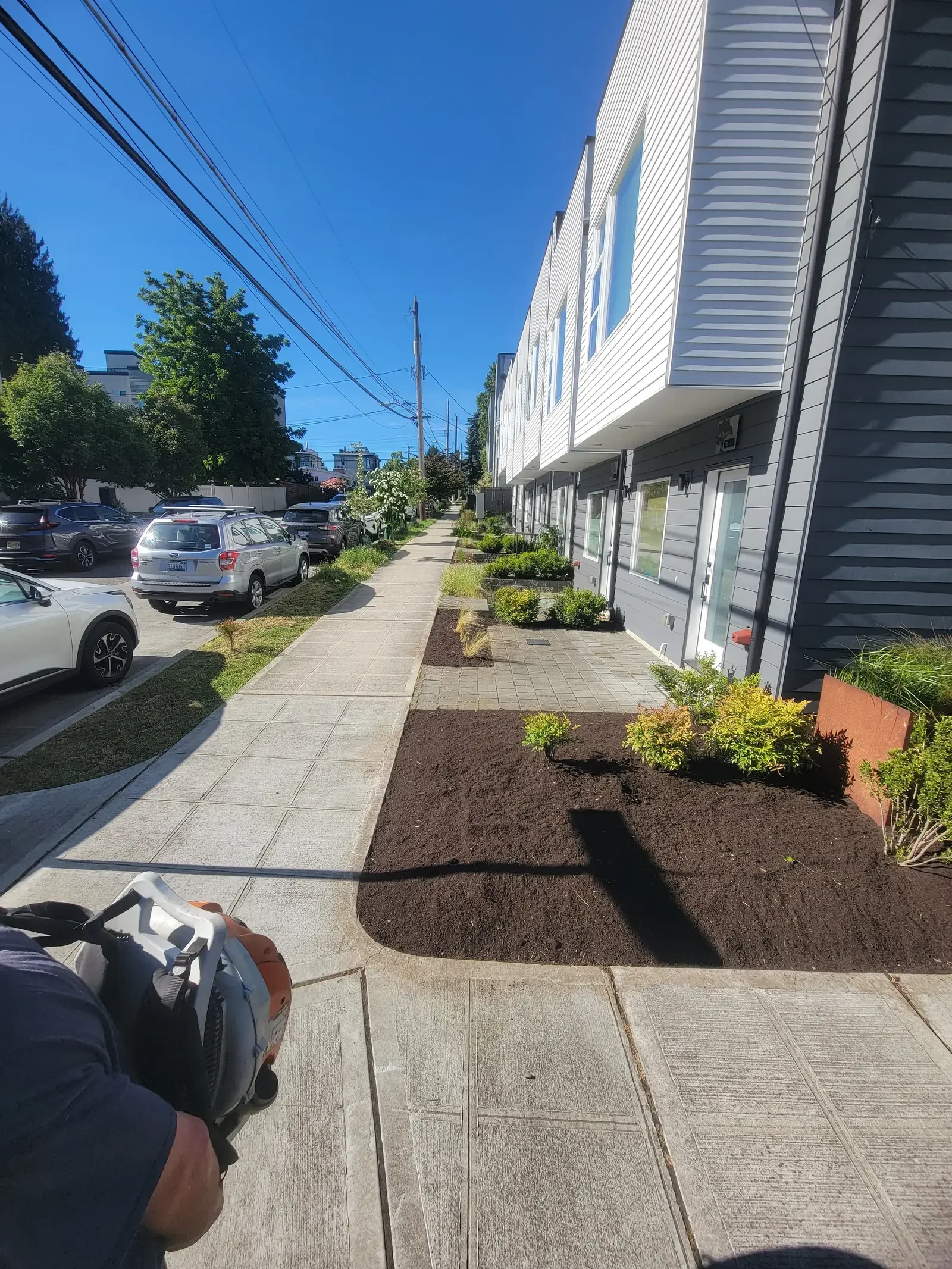
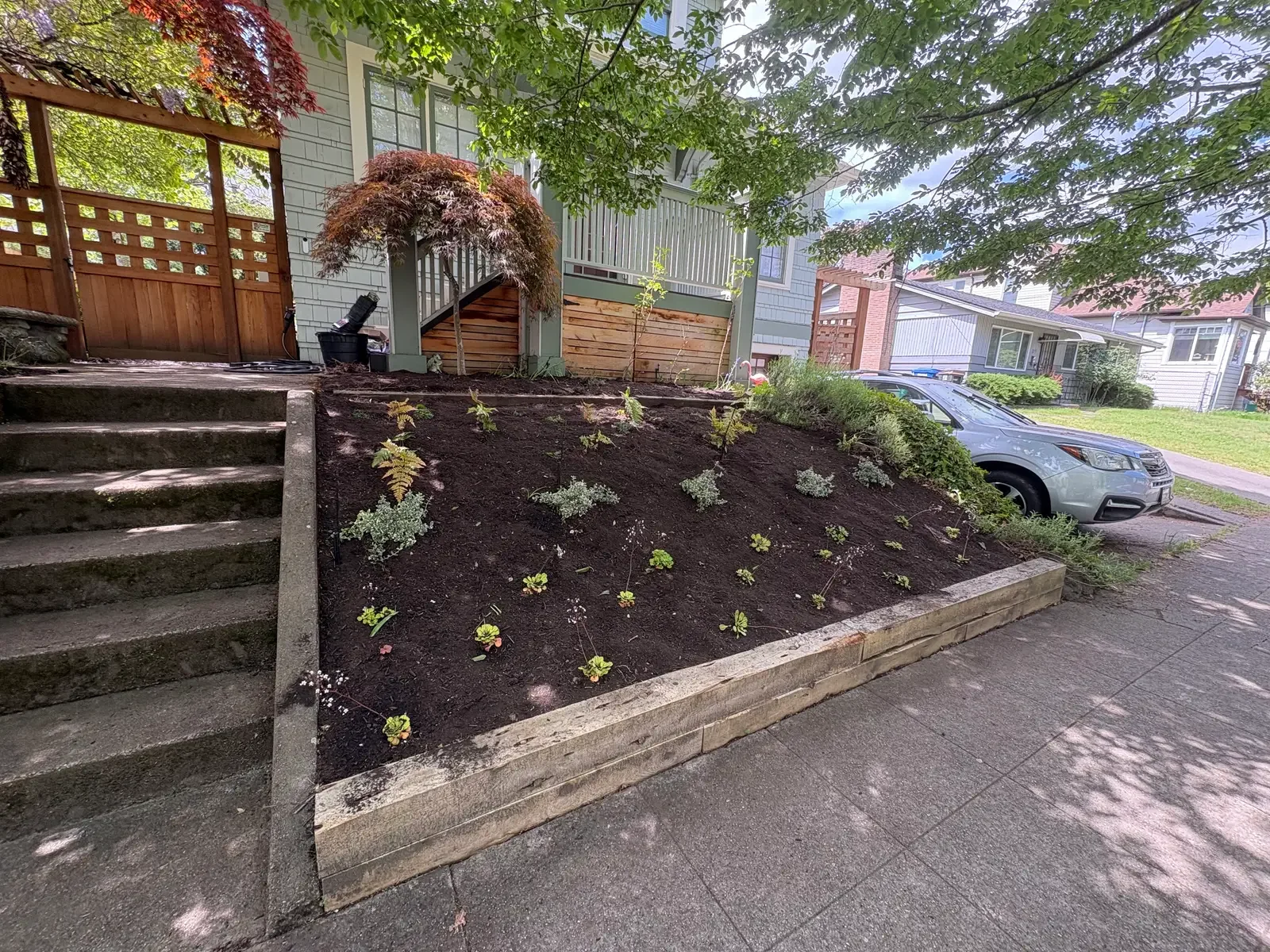
We started with a new planting plan for the front bed. Fresh compost mulch went down across the beds, rich and dark and at a proper depth, which does two jobs at once. It looks right, and it helps the soil hold moisture and break down into something the plants can actually use. We filled the gaps through the rest of the property with new planting chosen to work with what was already established rather than against it.
The side path already had good bones, a gravel walkway edged with river rock, so we concentrated on the beds alongside it. New plants went in along both sides, set into fresh compost mulch with enough spacing to grow in without crowding. That is the kind of detail that makes a narrow side yard read as deliberate instead of leftover.
The containers changed the most. We packed them with seasonal annuals, marigolds, begonias and impatiens, layered for height and colour so they read full immediately. Then we went through the drip irrigation to confirm every plant, in the ground and in the pots, is genuinely getting water where it needs it. A good planting plan comes apart quickly if the irrigation is not dialled in.
This is work we do a great deal of: whole-property refreshes that pull everything together at once. New beds, fresh mulch, container planting, irrigation checked. It all connects.