
Spring Sprinkler Startup, and What Winter Usually Broke
How to bring irrigation back online after a Puget Sound winter without flooding a bed, plus the four failures we find most often on the first run of the year.
By Trevor Kokenge
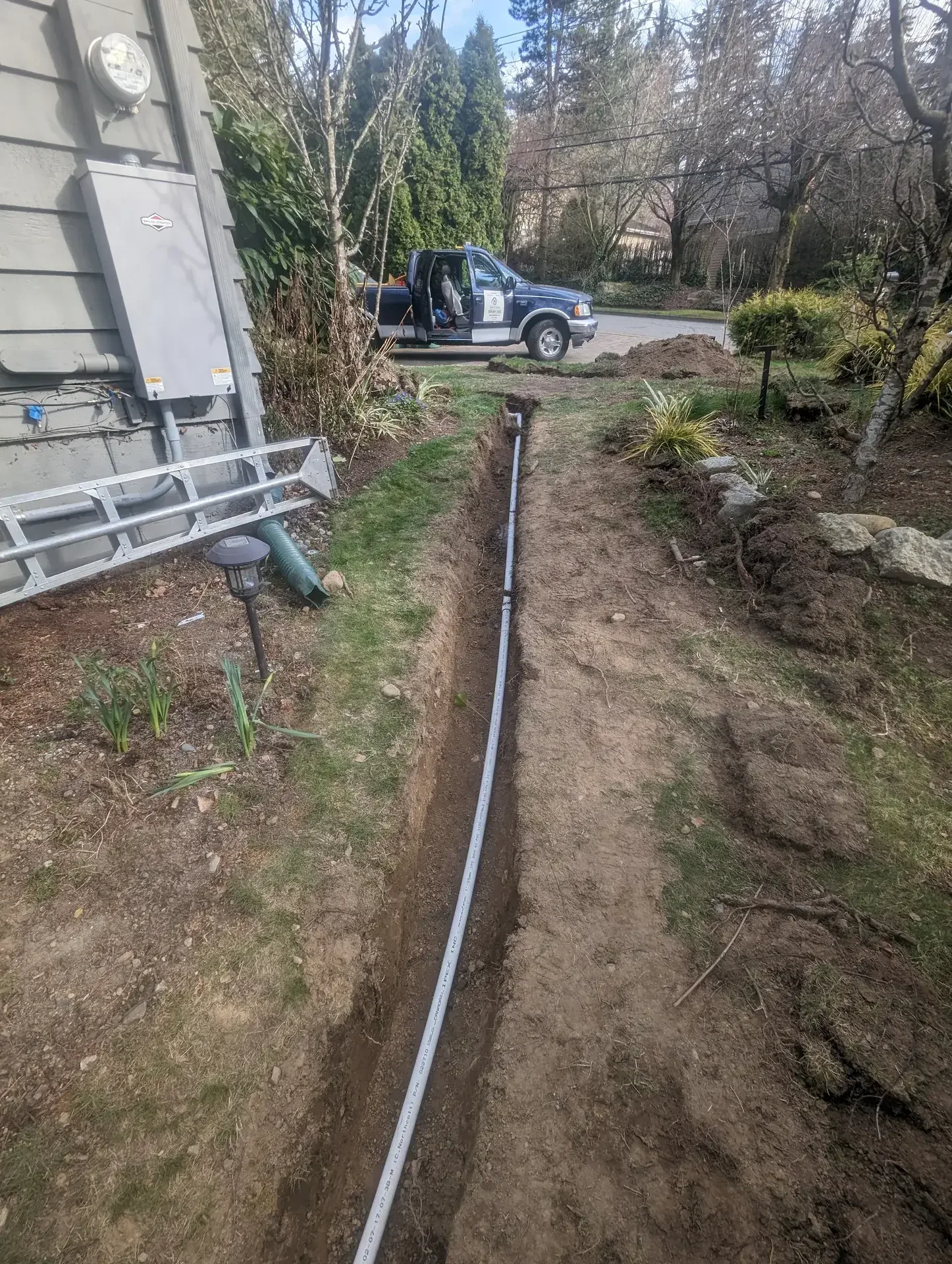
Bringing irrigation back online in spring is not complicated, and it is very easy to do in a way that damages something. The most common mistake is the simplest one: opening the main valve fast.
Charge the line slowly
Water moving into an empty line at full pressure creates a surge that can split a fitting, blow a head off its riser, or crack a backflow assembly. Open the main valve part way, let the line fill, and only then open it fully. It takes an extra two minutes and it prevents the majority of startup damage we get called out for.
If you winterized properly and blew the lines out in autumn, this is the moment that pays you back.
Run every zone, and watch it
Do not start the controller and walk away. Run each zone manually and stand there while it runs. You are looking for four things.
Heads that do not pop up. Usually debris in the head, sometimes a crushed riser, occasionally a head that has been driven over. Most clean out in a few minutes.
Heads spraying the wrong thing. Winter heave and mower contact rotate heads. A head watering the driveway is wasting every drop and leaving a dry patch in the lawn it was aimed at.
Wet spots that appear while the zone runs. Water surfacing where no head is means a cracked lateral underground. Mark it and deal with it before it undermines anything.
A zone that will not start at all. Usually a solenoid or the wiring to it rather than the controller itself.
Check the backflow assembly
Washington requires backflow prevention on irrigation connected to a potable supply, and the assembly is the part most likely to have been damaged by a freeze. Look for cracks in the body, weeping at the test cocks, and water where none should be. Annual testing by a certified tester is required in most jurisdictions here.
Reset the controller for spring, not for August
The schedule that finished last season was built for a dry August. Running it in March will drown beds that are already sitting wet from winter rain.
Start low. Most Puget Sound properties need very little supplemental water until well into June, and plenty need none at all in a wet spring. Then increase through summer as the rain stops. Watering deeply and less often builds deeper roots than watering lightly every day.
Shaded and sun-exposed zones should never share a schedule. If they do on your property, that is worth correcting.
When to call someone
Irrigation repair is one of those jobs where the diagnosis is most of the work. If you are seeing a wet spot with no visible head, a zone that will not fire, or anything weeping at the backflow, that is worth having someone look at before it becomes a bigger excavation.
More from the journal
How Often Should You Schedule Landscape Maintenance in Seattle?
Weekly, every 2 weeks, every 4 weeks or quarterly. What each rhythm actually buys you on a Puget Sound property, and how to pick without overpaying.
Read the article
When to Prune Hydrangeas in the Puget Sound
Timing depends entirely on whether the plant sets buds on old or new wood. Get that wrong and you cut off a year of flowers.
Read the articleTell us about the property
We get back to you as soon as we can with next steps and a visit window. If the job is not a fit for us, we will say so.