
When to Prune Hydrangeas in the Puget Sound
Timing depends entirely on whether the plant sets buds on old or new wood. Get that wrong and you cut off a year of flowers.
By Trevor Kokenge
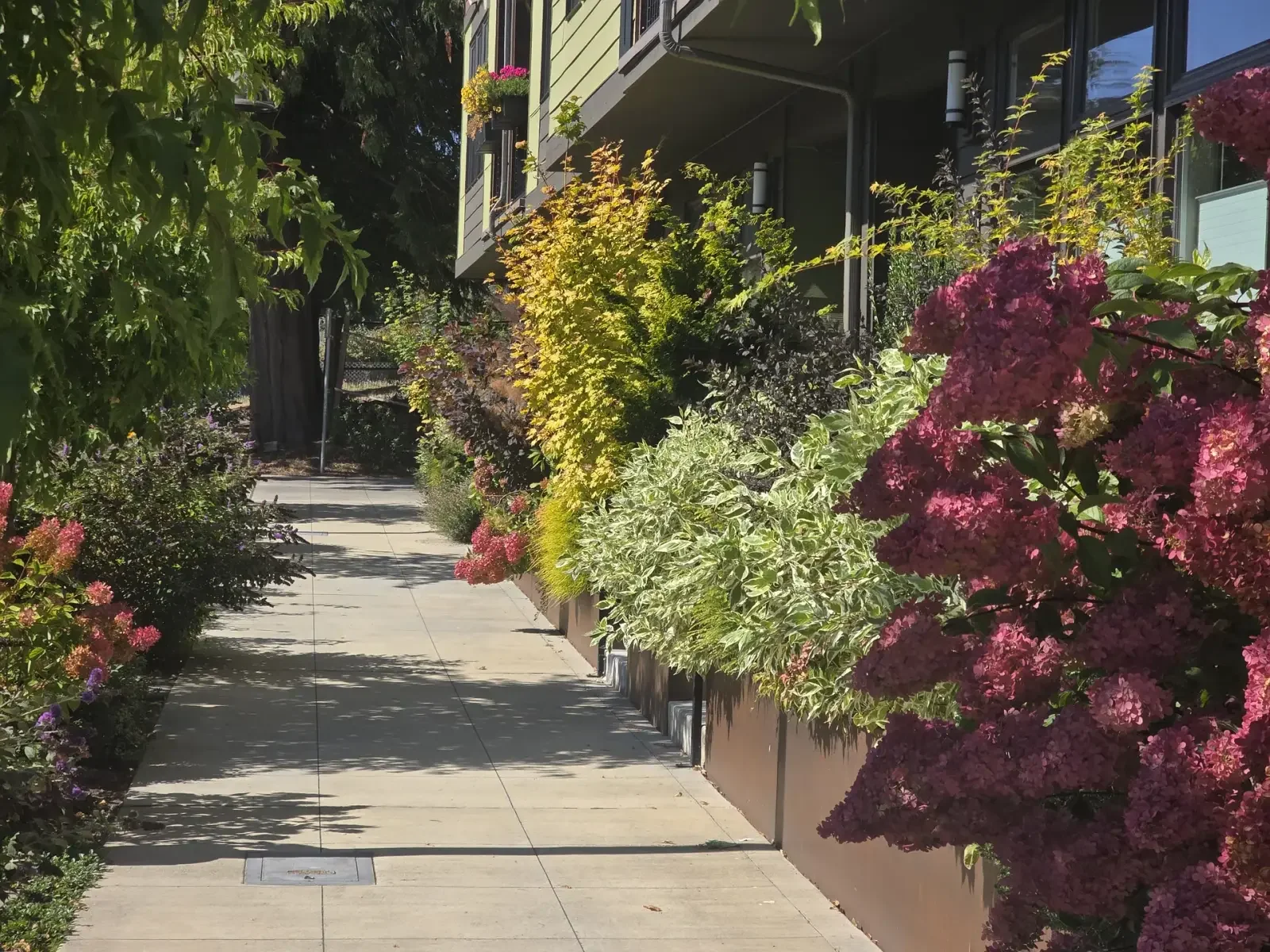
Hydrangeas are the plant we get asked about most, and almost every question is really the same question: why did it not flower this year.
The answer is usually timing. Some hydrangeas set their flower buds on last year’s wood, during the previous summer. Cut those back in autumn or early spring and you have removed the flowers before they opened. Others set buds on the current season’s growth, and those can be cut hard without losing anything.
Work out which one you have
Bigleaf (Hydrangea macrophylla). The mophead and lacecap hydrangeas in most Seattle gardens. Old wood. These are the ones people accidentally prune into a leafy green shrub that never blooms.
Oakleaf (H. quercifolia). Old wood, distinctive lobed leaves, good autumn colour.
Climbing (H. anomala petiolaris). Old wood, and best left alone apart from keeping it off the gutter.
Panicle (H. paniculata). New wood. Cone-shaped flower heads. Can be cut back hard in late winter.
Smooth (H. arborescens), including Annabelle. New wood. Also fine to cut back hard.
There is a simple field test if you are unsure: if the plant flowered in early summer, it is probably old wood. If it flowered mid to late summer, probably new.
Old wood: prune right after flowering
For bigleaf, oakleaf and climbing hydrangeas, the window is immediately after the flowers fade, which around here is generally August. That gives the plant the rest of the season to set next year’s buds.
Take out dead stems at the base, remove a third of the oldest stems on a mature plant to open it up, and otherwise leave it alone. These plants do not need or want an annual haircut.
Do not prune old-wood hydrangeas in autumn, winter or spring. That is the mistake.
New wood: prune in late winter
Panicle and smooth hydrangeas are cut back in February or early March, before growth starts. They tolerate hard pruning and flower on whatever they push out that season.
Leave the spent flower heads on through winter
This is specific to our climate and worth knowing. Old flower heads left on the plant give the buds underneath some protection through winter, and a Puget Sound cold snap in February can take those buds out. Tidy the heads off in spring once the risk has passed, not in October.
It looks untidy for a few months. It is the difference between flowers and no flowers.
The one exception
If a plant is genuinely overgrown and crowding a path, correct it. A year without flowers is a fair trade for a shrub that fits where it lives. Just do it knowingly rather than by accident, and stage the work across two seasons where you can rather than cutting the whole thing to the ground.
More from the journal

How Often Should You Schedule Landscape Maintenance in Seattle?
Weekly, every 2 weeks, every 4 weeks or quarterly. What each rhythm actually buys you on a Puget Sound property, and how to pick without overpaying.
Read the article
Spring Sprinkler Startup, and What Winter Usually Broke
How to bring irrigation back online after a Puget Sound winter without flooding a bed, plus the four failures we find most often on the first run of the year.
Read the articleTell us about the property
We reply within one business day with next steps and a visit window. If the job is not a fit for us, we will say so.