
Standing water sneaks up on a property. It starts as a soggy patch after rain, and within a couple of winters the whole area is waterlogged, muddy and out of use. The ground is holding water with nowhere to send it.
Puget Sound makes this common. Long wet winters, heavy clay in much of the region, and lots that were graded for the house rather than for where the water would end up. Drainage is the most frequent underlying cause of problems we get called out for, including several that arrive described as something else: a lawn that will not grow, a patio that has moved, a retaining wall leaning forward.
What the work looks like
French drains. A trench, a perforated line, drain rock, and fabric so soil cannot silt the run up. Water takes the path of least resistance, and the drain is that path. The run has to fall consistently and it has to discharge somewhere that is genuinely better than where the water started.
Downspout tie-ins. Roof water is a large volume arriving fast at a single point. Tying downspouts into a buried line and carrying that water away from the building is frequently the cheapest fix on a property and the one that changes the most.
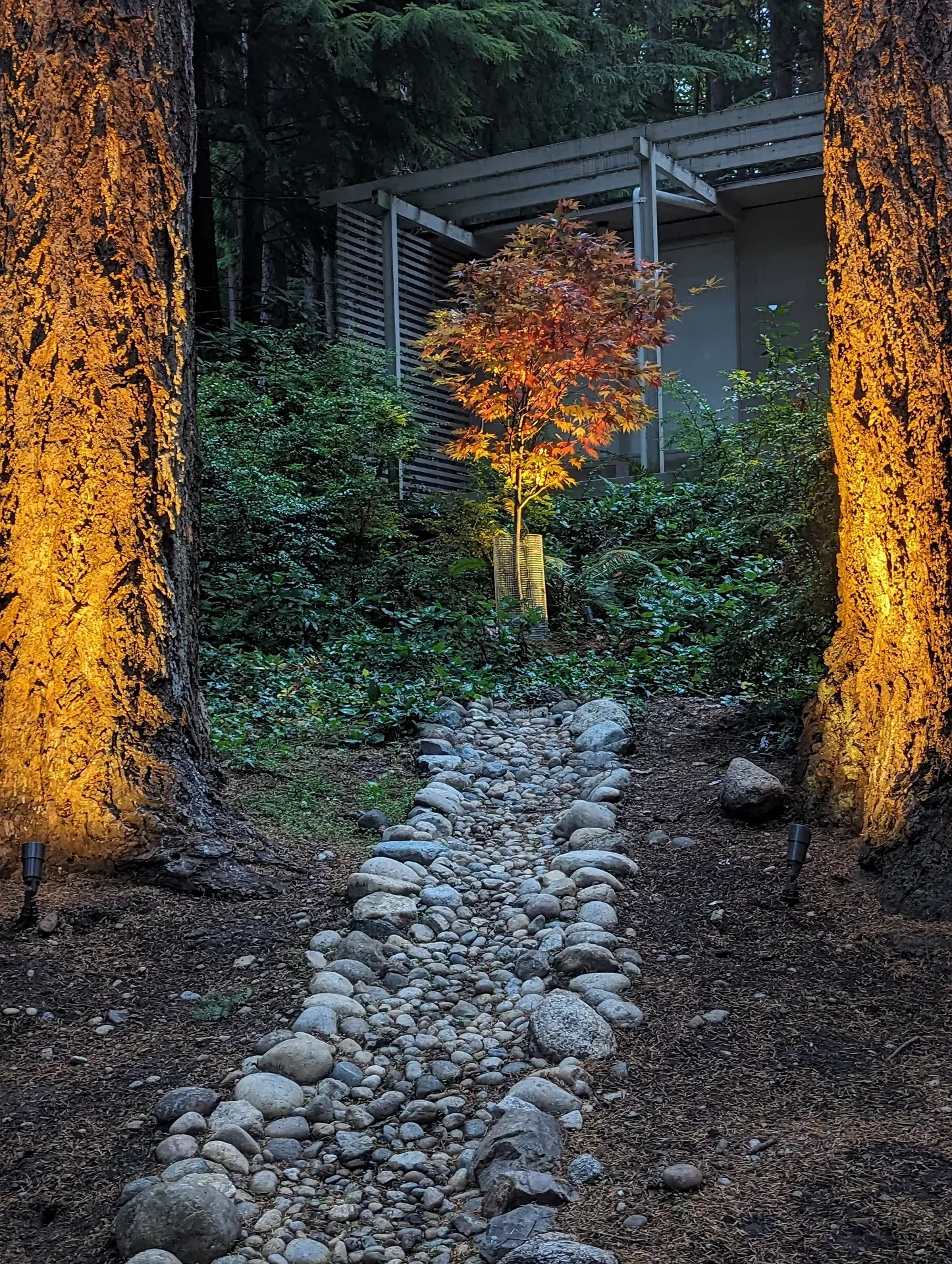
Dry creek beds. A surface route, built to read as part of the garden rather than as infrastructure. Useful where water needs to cross a space and where a buried line is impractical.
Regrading. Sometimes the answer is not a pipe. Correcting a slope so water runs away from the house rather than toward it solves a surprising number of cases outright.
Rain gardens. A planted depression that takes roof and surface runoff and lets it soak in slowly, with species chosen to handle both winter saturation and an August with no rain at all.
Working with the property rather than against it
The goal on every drainage job is to route water out efficiently without creating a new problem somewhere else. Pushing a neighbour’s lot underwater is not a solution. Neither is discharging into a low corner that will simply flood instead. We look at where water arrives, where it collects and where it can legitimately go before anything is dug.
Once the drainage work is finished, the disturbed area gets brought back: fresh mulch, planting repaired, beds edged. A finished drainage job should look like nothing happened.
Common questions
How do I know whether I have a drainage problem?
Standing water that is still there a day after the rain stops. Moss taking over a lawn. A soggy patch that shows up in the same place every winter. Water against a foundation.
What is a French drain?
A trench with a perforated pipe in drain rock, wrapped so soil cannot silt it up. It gives water a path with less resistance than the surrounding ground, and carries it somewhere it can leave.
Can you tie into my existing downspouts?
Usually yes, and it is often the cheapest fix available. A downspout discharging beside the foundation causes an enormous share of the problems we are called out for.
Will this work in clay?
Yes, and clay is exactly why the work is needed here. Clay holds water rather than letting it pass, so the fix is giving the water a defined route out rather than hoping the ground absorbs it.