
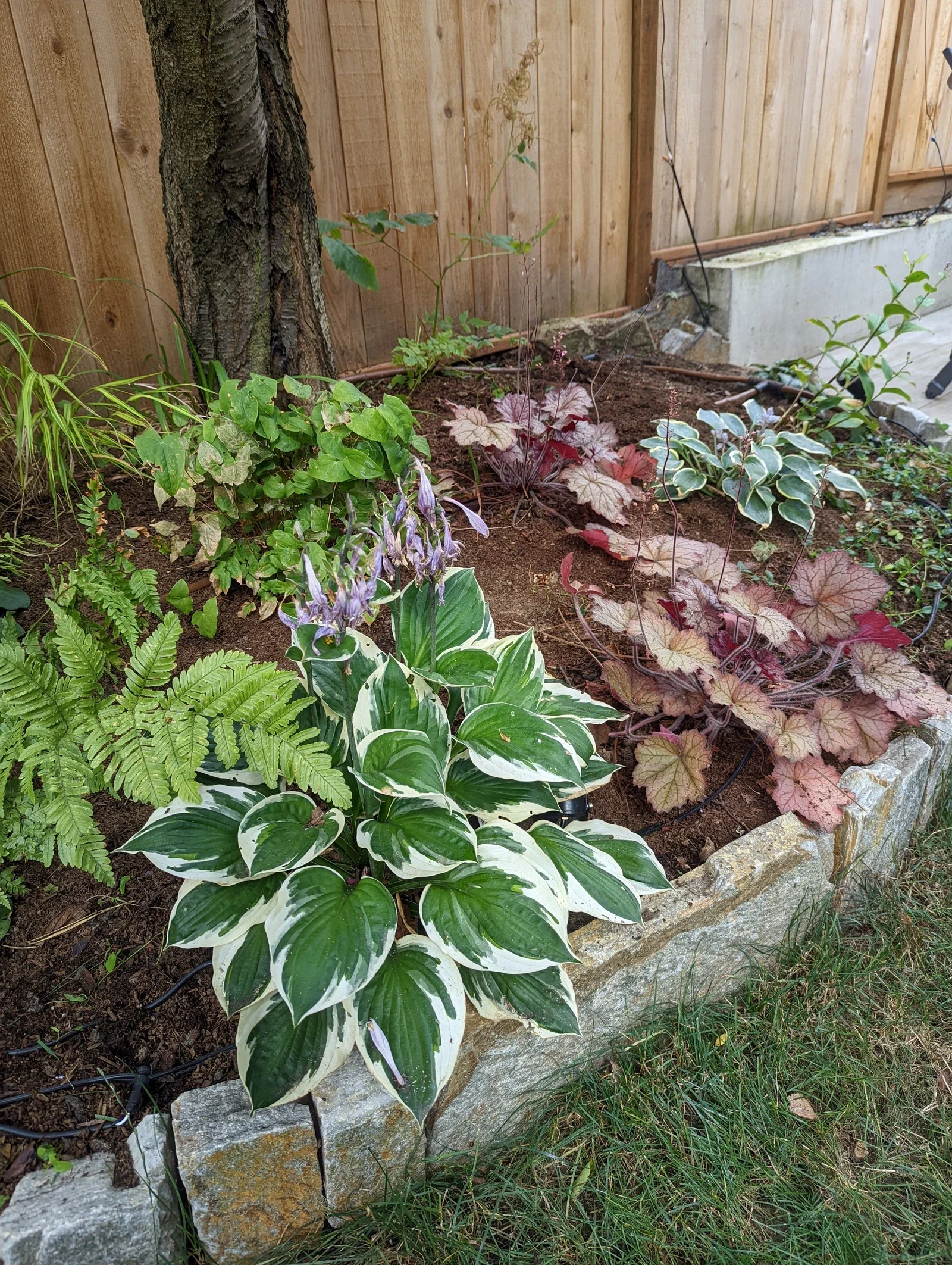
Softscape covers every living part of a landscape: trees, shrubs, perennials, ground cover and lawn. Each one needs the right species, the right soil preparation and the right position, and getting it wrong is expensive in a way that only becomes visible two summers later.
Seattle’s clay soil and wet winters make planting genuinely hard to get right. Species that perform elsewhere fail here without soil work, drainage and honest assessment of how much sun a spot actually gets across the day. We pick plants on how they behave in King County rather than on how they look in a catalogue.
Spaced for what a plant becomes
A bed that looks full the day it is planted has been overplanted, and in three years half of it has to come out. We space on mature size, which means a new bed looks sparse for a season and correct after that.
This is the single most common thing we are called in to fix on landscapes somebody else installed: shrubs planted at nursery spacing that now touch the house, crowd the path and have to be cut back into their own dead interior every year.
What we install
Trees. Placement and depth matter from the first day, because nothing about a tree is easy to change later. Species suited to the soil and moisture, root balls set at the right height rather than sunk, and staking only where it is genuinely needed and removed once it is not.
Shrubs. These carry the structure of a bed and give a garden presence in February. Sized and positioned on mature dimensions and water needs so beds stay in proportion and need little corrective pruning.
Perennials and annuals. Chosen for the light and moisture they will actually get, and layered so something is doing the work in each part of the season rather than one spectacular fortnight in June.
Ground cover. Bare soil between beds and on slopes grows weeds and washes out in heavy rain. Ground cover closes that gap, holds soil and reduces the weeding load permanently.
Soil first
Planting into unimproved Seattle clay is the most reliable way to waste a plant budget. Beds get loosened, amended to suit what is going into them, and graded so water leaves rather than collecting around the root ball. Where the ground genuinely cannot drain, the answer is a raised bed or drainage work before anything goes in the ground.
Everything finishes with mulch, which holds moisture through August, moderates soil temperature and slows the weed cycle for the first year while planting establishes.
Common questions
Why does planting fail here?
Usually clay. Water sits in the planting hole, roots lose oxygen and the plant declines over a season or two. Species that thrive elsewhere fail here without soil work and drainage.
Why do beds look sparse when they go in?
Because they are spaced for mature size. A bed that looks full on day one is overplanted, and in three years half of it has to come out.
Do you plant natives?
Often, and for good reasons: they handle a wet winter and a dry August without intervention. Native is a tool rather than a rule, and plenty of non-native planting performs well here.
What is the best time to plant?
Autumn, so roots establish through the wet months before the first dry summer. Spring works. Midsummer is possible with committed watering and is the hardest window.