
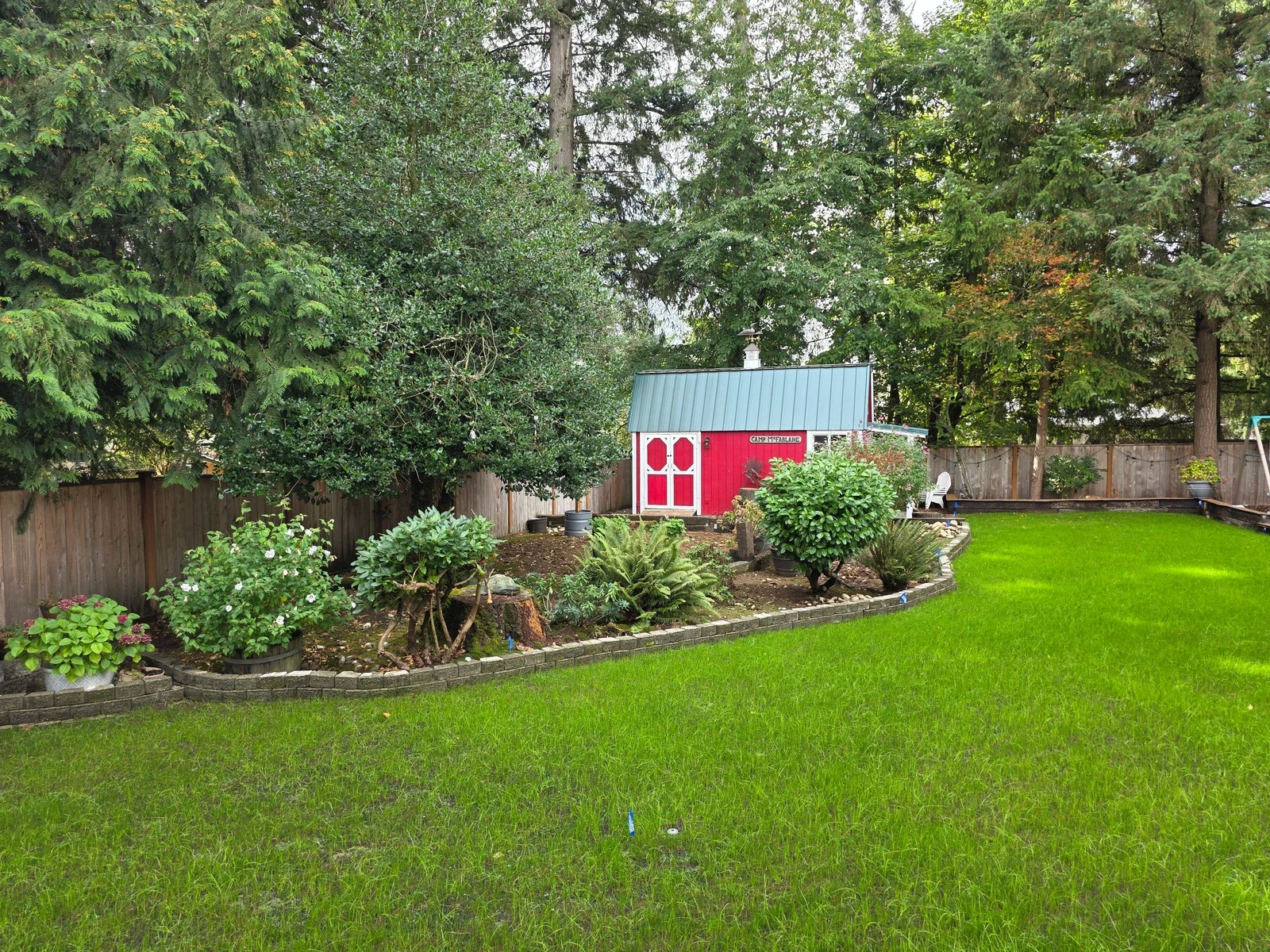
Most tired lawns in this region are not tired because of the grass. They are compacted, matted with thatch, growing in too much shade, or sitting on ground that holds water all winter. Throwing seed at any of those produces a slightly greener version of the same problem.
Lawn renovation is the sequence that addresses the surface before the seed goes down. Trevor groups aeration, dethatching and overseeding together because they are one job, not three, and doing them in the wrong order or across separate visits wastes most of the benefit.
The sequence
- Mow short. Lower than a normal cut, so seed can reach soil rather than resting on grass.
- Dethatch where a mat has built up. Thatch and moss stop water, air and seed getting through.
- Aerate. Core aeration pulls plugs out and opens compacted soil. On Seattle clay this is usually the step that decides whether the renovation works.
- Topdress with a thin layer of soil, which improves the surface the seed germinates into.
- Seed with a Northwest-adapted blend, raked lightly in.
- Protect with peat moss over the seed where the site needs it, which holds moisture for new seedlings through a dry spell.
Timing is most of it
Mid September through mid October, and April through May. Those are the windows. Spring works once temperatures are reliably above about 55 degrees. Autumn is often better, because seed goes in with the returning rain and has the whole wet season to establish before its first summer.
Seeding in midsummer is possible and needs committed daily watering to work at all. We will tell you when it is worth waiting six weeks rather than spending the money now.
Repair or replace
Sometimes a lawn is too far gone and new sod is cheaper than three seasons of trying to rescue it. Sometimes the real problem is drainage and no amount of seed will hold. We will say which one you are looking at rather than selling the renovation regardless.
What we handle
- Overseeding to thicken a thinning lawn
- Full renovation after construction, regrading or removal
- Patch repair for damage from pets, traffic or drainage failure
- Aeration and topdressing as standalone seasonal work
- Moss treatment, with an honest read on what is causing it
Common questions
When should overseeding happen?
Mid September through mid October, or April through May. Those two windows give seed enough warmth to germinate and enough moisture to survive. Outside them the success rate drops sharply.
How much watering does new seed need?
Daily for the first few weeks unless it is raining, then less often. New seed needs consistent moisture rather than heavy soaking. Pooled water is as bad as drought.
How soon will it grow in?
Sprouts in 7 to 14 days. Full coverage usually takes 4 to 6 weeks depending on weather and watering.
Is aeration always needed?
Not always, but on a compacted Seattle lawn it is usually the step that makes the difference. It opens the soil so seed, air and water reach the root zone instead of sitting on a mat of thatch.