
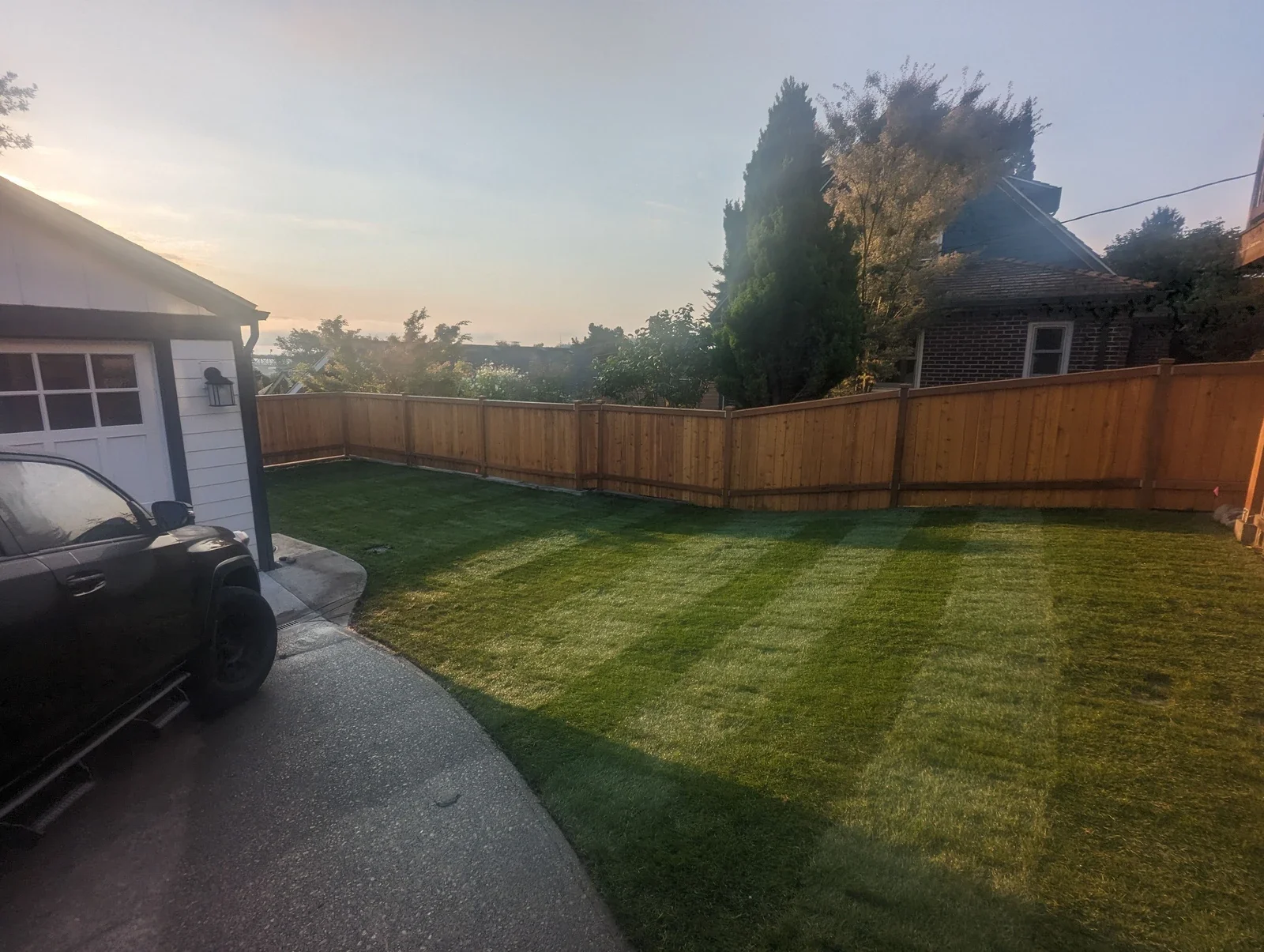
Resodding replaces worn, weedy or patchy grass with full-coverage turf in a day. It resets the surface and builds a base that holds up through wet winters and a dry August. It is the practical fix when a lawn no longer responds to repair.
Why it works here
Coverage the same day. No six-week wait and no patchy germination. The surface is walkable within a couple of weeks.
Weeds get shut out. Laid tight with no gaps, sod blocks light to open soil. Clover, dandelion and crabgrass have nowhere to start.
The soil stops moving. Sod is a protective layer over exposed ground, holding it through storms and irrigation. That matters most on the slopes that wash out.
Regrading comes with it. Preparation is where most of the value sits. A surface that sheds water across the lawn rather than letting it pool is what keeps moss and soft spots away afterward.
How the job runs
- Strip the old lawn. Existing grass, weeds and surface debris removed and hauled.
- Prepare the soil. Compacted ground loosened, amended where it needs it, and graded so water runs off rather than collecting.
- Lay the sod. Tight seams, staggered rows, cut in around beds and hard edges.
- Roll and water in. Good contact between root and soil is what gets it established.
- Leave a schedule. A simple watering plan for the first weeks, plus when to make the first cut and what healthy establishment looks like.
The first three weeks decide it
New sod arrives with almost no root contact and dries out fast. Consistent watering through the first few weeks is the single thing that decides whether you end up with a lawn or a very expensive brown rectangle. We leave written instructions and we would rather you called with a question than guessed.
Where drainage is the underlying problem, that gets solved first. Laying fresh sod over ground that holds water buys about one season. See drainage and French drains.
Common questions
Sod or seed?
Sod gives a walkable lawn the same day and suppresses weeds immediately, and it costs more. Seed costs less and takes six weeks and a lot of watering. On a slope or a site you need usable soon, sod usually wins.
When can I walk on it?
Lightly after about a week. Normal use after two to three weeks, once the roots have taken hold. Pulling gently at a corner tells you whether it has rooted.
How much watering does it need?
A lot at first. New sod has almost no root contact and dries out fast. We leave a watering schedule with every install, and following it is the main thing that decides whether the lawn takes.
What blends do you use?
Perennial ryegrass, fine fescue and Kentucky bluegrass blends, picked for appearance, durability and how they behave in Seattle shade and rain.