
Irrigation is one of the few pieces of a landscape that fails invisibly. A zone that is under-watering does not announce itself, it just produces a patch of lawn that never quite recovers and planting that stalls in its second summer.
Puget Sound makes this specific. We get a long wet winter that suggests irrigation is unnecessary, then a genuinely dry stretch from July into September that catches people out. Add heavy clay across much of the region, which sheds water rather than absorbing it, and the watering has to be slower and more deliberate than people expect.
How we lay it out
Zoned by exposure, not by convenience. A shaded north bed and an open south-facing lawn want different amounts of water on different days. Putting them on one zone means one of them is always wrong. We split zones by sun, slope and plant type before anything is trenched.
Drip in beds, spray on lawn. Drip lines put water at the root rather than on the leaf, lose far less to evaporation and wind, and keep foliage dry, which matters for disease pressure in a damp climate. Lawn takes spray heads or rotors matched to the shape of the area.
Slow on clay. Clay takes water at a low rate and then sheds the rest across the surface. Shorter cycles repeated with a soak between them get water into the root zone. One long run just waters the driveway.
Pressure checked first. Every job starts with a pressure and flow test. Designing a layout without knowing what the supply can deliver is how you end up with eight heads on a zone that can properly run five.
What we do
- Design and installation for new landscapes and retrofits into established ones
- Drip conversion for beds currently on spray
- Leak diagnosis and repair, including finding the wet patch with no visible head
- Controller replacement, including weather-responsive controllers
- Backflow assembly installation, replacement and annual testing coordination
- Seasonal shutdown and spring startup, covered under irrigation winterization
Repairs
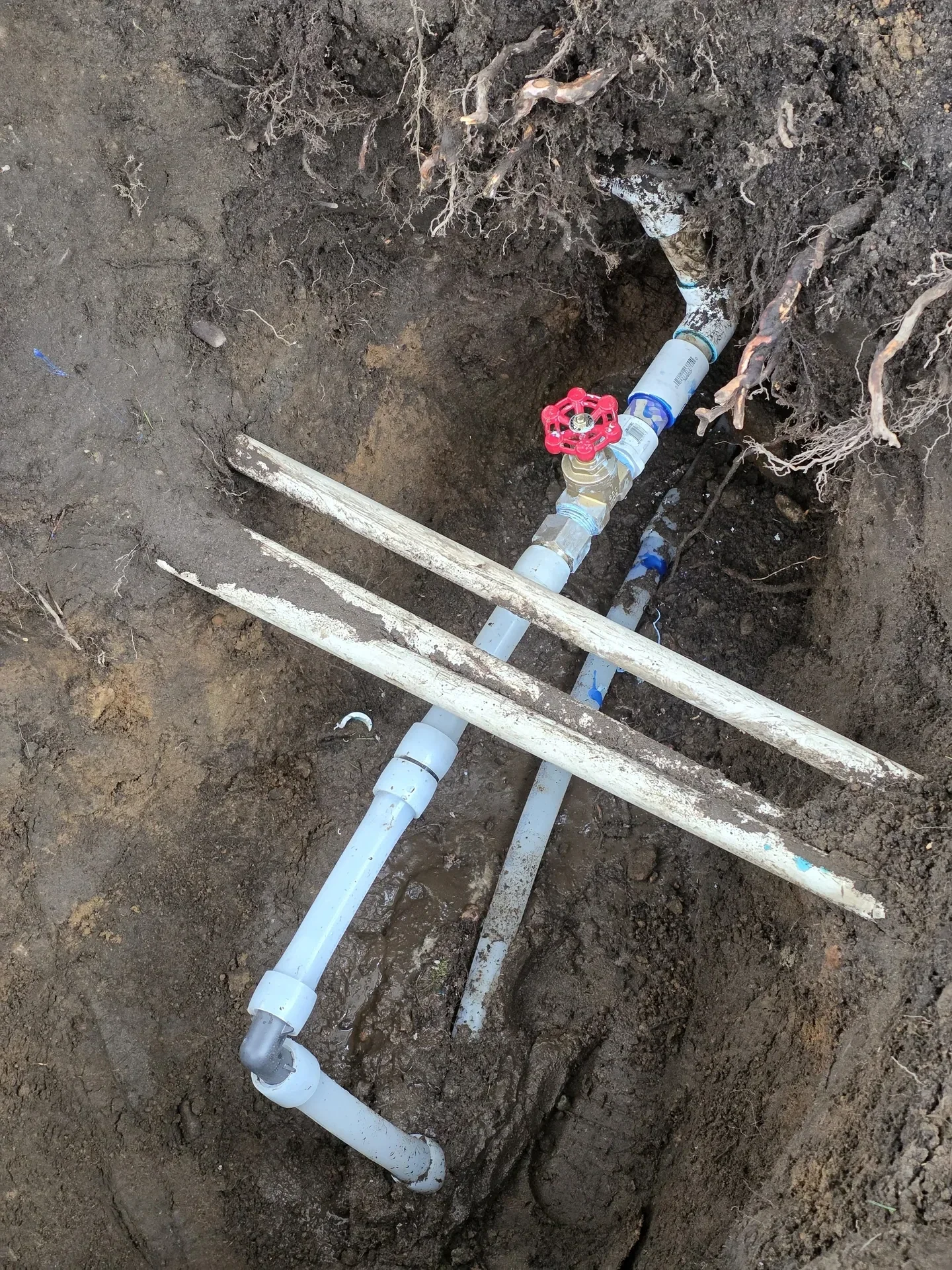
Most of our irrigation work is repair rather than installation. Heads knocked out of alignment by a mower, a lateral split by a winter freeze, a solenoid that stopped responding, a controller nobody has been able to program since the previous owner left. The diagnosis is usually most of the job.
Common questions
Do I really need irrigation in Seattle?
It depends on exposure. A shaded back garden often manages without. An open west-facing lawn goes dormant every August without water, and new planting in its first two summers needs it almost everywhere.
Sprinklers or drip?
Lawn wants spray or rotors. Beds want drip, which puts water at the root rather than on the foliage and loses far less to evaporation. Most properties run both, on separate zones.
Why zone by exposure?
Because a shaded north bed and an open south lawn do not want the same water. Running them on one schedule either drowns the shade or starves the sun.
Is backflow prevention required?
Yes. Washington requires it on irrigation connected to a drinking water supply, and in most jurisdictions the assembly has to be tested annually by a certified tester.