
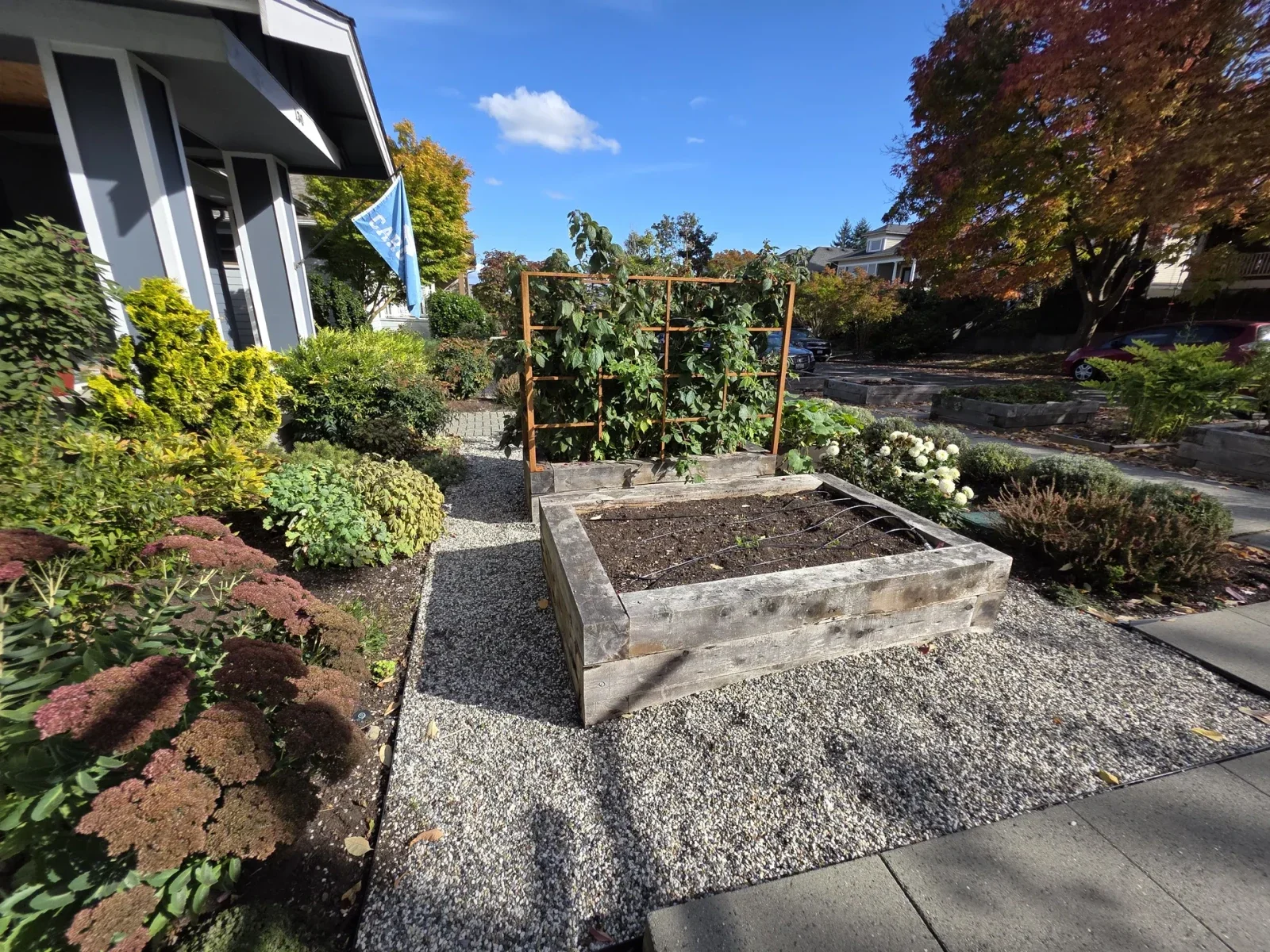
Growing food here is genuinely rewarding and it is constrained by one thing above all others, which is light. Seattle lots are close-set and often shaded by mature conifers, and an edible garden put in the wrong corner will never produce regardless of how well it is built.
So this work starts with watching where the sun actually falls across a day, in the season you will be growing, rather than assuming.
Raised, almost always
Raised beds are the right answer on most properties here. They drain, which matters enormously in clay. They warm up earlier in spring, which extends a short season at the front end. And they let you bring in a growing medium rather than trying to amend heavy native ground into something vegetables will tolerate.
Cedar is the usual material: durable in wet conditions, untreated, and it ages well. Height depends on what you are growing and how much bending you want to do.
What suits this climate
A cool, long, damp season favours brassicas, leafy greens, peas, potatoes and roots. Berries do extremely well: raspberries, blueberries, currants. Fruit trees do well too, with apples and plums the reliable choices and disease-resistant varieties worth the extra effort to source.
Heat crops are the hard ones. Tomatoes, peppers and squash need the warmest, most sheltered, most south-facing position on the property, and even then a cool August is a cool August.
What we install
- Cedar raised beds, sized and positioned for light and access
- Growing medium brought in and filled, rather than native clay amended
- Irrigation to each bed, usually drip, because inconsistent watering is what splits and bolts crops
- Fruit trees and berry planting, positioned for pollination and mature size
- Paths between beds that stay usable in February, which generally means gravel rather than grass
- Enclosure where deer, rabbits or dogs are a factor
Soil and water
Beds get a proper growing medium and compost worked in, with a plan for topping up each season. Drip irrigation goes in at build time, because the most common reason a home vegetable bed underperforms is inconsistent watering rather than anything exotic.
Where the wider property needs it, edible beds sit alongside planting and softscape work so the kitchen garden reads as part of the landscape rather than as an allotment bolted onto it.
Common questions
How much sun does a vegetable bed need?
Six hours minimum in the growing season, and eight is much better. This is the constraint on most Seattle lots, because mature conifers and close-set houses take more light than people estimate.
Raised beds or in the ground?
Raised, almost always, here. They drain, they warm up earlier in spring, and they let you bring in a growing medium instead of fighting clay.
What actually does well in Seattle?
Anything that likes a cool, long season. Brassicas, leafy greens, peas, potatoes, berries, apples and plums. Heat crops like tomatoes and peppers need the warmest, most sheltered spot you have.
Can you maintain it for me?
We can handle the structure, the soil and the perennial planting. Week-to-week vegetable growing is generally something clients want to do themselves, which is usually the point.