
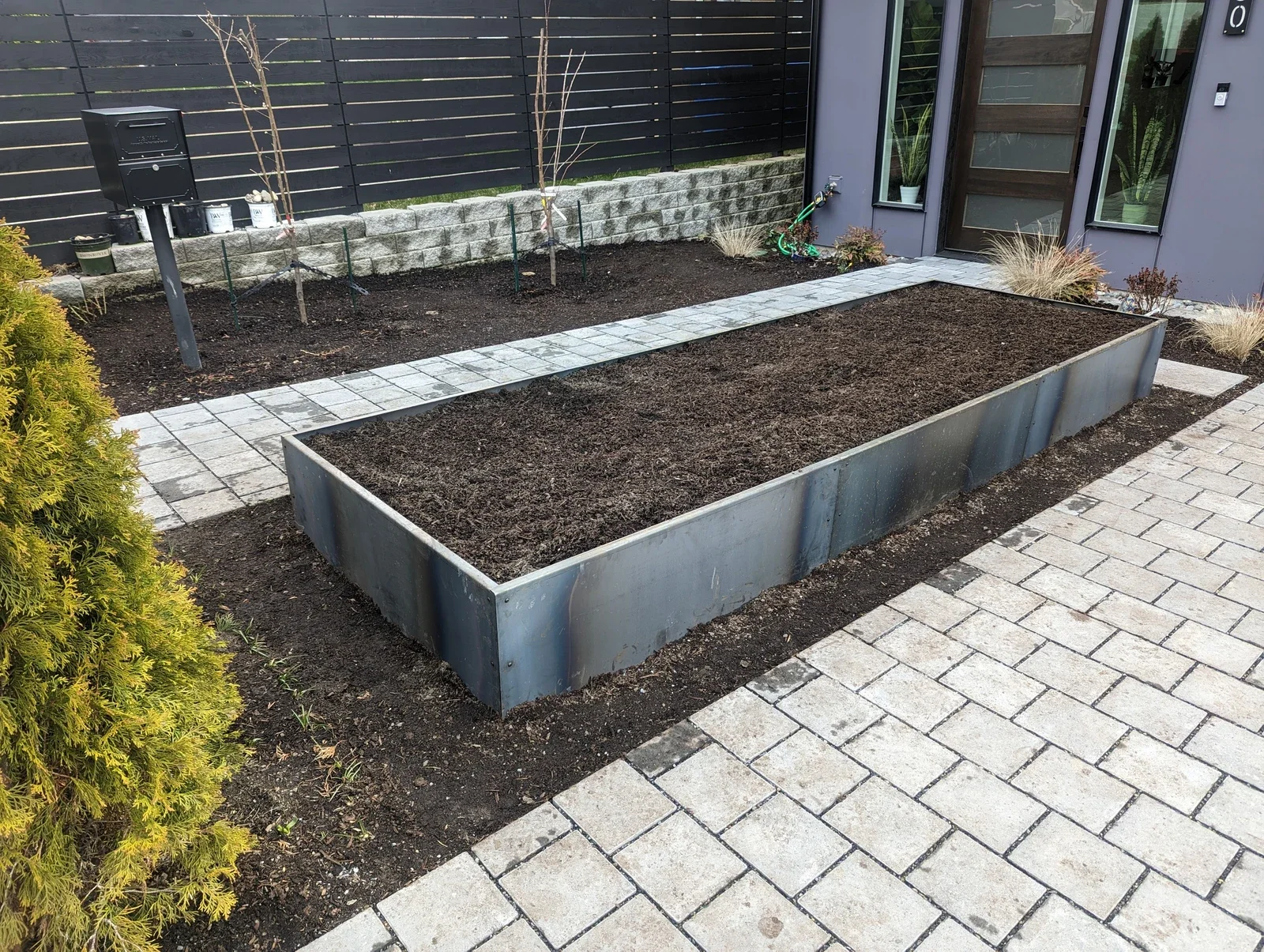
Mulch is the cheapest thing you can do to a bed and one of the few jobs where doing it slightly wrong causes active harm.
Done properly it holds moisture through a dry August, moderates soil temperature, slows the weed cycle and makes a planted bed read as finished. Done badly it suffocates roots, holds water against a trunk and rots it, or gets laid so thin it does nothing at all.
Depth, and where it stops
Two to three inches across a bed is the working range. Thinner and weeds come straight through. Much thicker and water struggles to reach soil while the root zone sits in a permanently damp layer, which in a climate like ours is a real risk rather than a theoretical one.
Around a trunk, the mulch stops a few inches short and stays flat. Piling it into a cone against the bark holds moisture where it does damage. This is probably the most common mulching mistake on residential property and it kills trees slowly enough that nobody connects the two.
What we supply
- Bark, fine or medium, as a surface layer for weed suppression and moisture
- Compost, worked into beds as a soil improver rather than left on the surface
- Arborist chip, cost-effective on larger areas and informal planting
- Soil and topdressing blends for lawn renovation and new beds
What the visit includes
Beds weeded and edged before anything goes down, because mulching over weeds simply hides them for six weeks. Existing material assessed, since adding three inches to a bed that already has four is how the depth problem starts. Material spread evenly, pulled back from trunks and stems, and every hard surface blown off afterward.
Mulch installation is part of a cleanup rather than a recurring visit, and it is quoted with the job.
Common questions
How deep should mulch go?
Two to three inches across a bed. Thinner and weeds push through. Much thicker and water struggles to reach the soil while roots sit in a layer that stays wet.
How often does it need redoing?
Most beds want topping up once a year, usually in spring. Bark breaks down more slowly than compost and goes longer between refreshes.
Bark or compost?
Bark is a surface layer for suppressing weeds and holding moisture. Compost is a soil improver that feeds the bed as it breaks down. Plenty of beds want compost worked in and bark on top.
Can you mulch around a tree?
Yes, and never piled against the trunk. A mulch volcano holds moisture against bark and rots it. The ring should be flat and pulled back a few inches from the stem.