
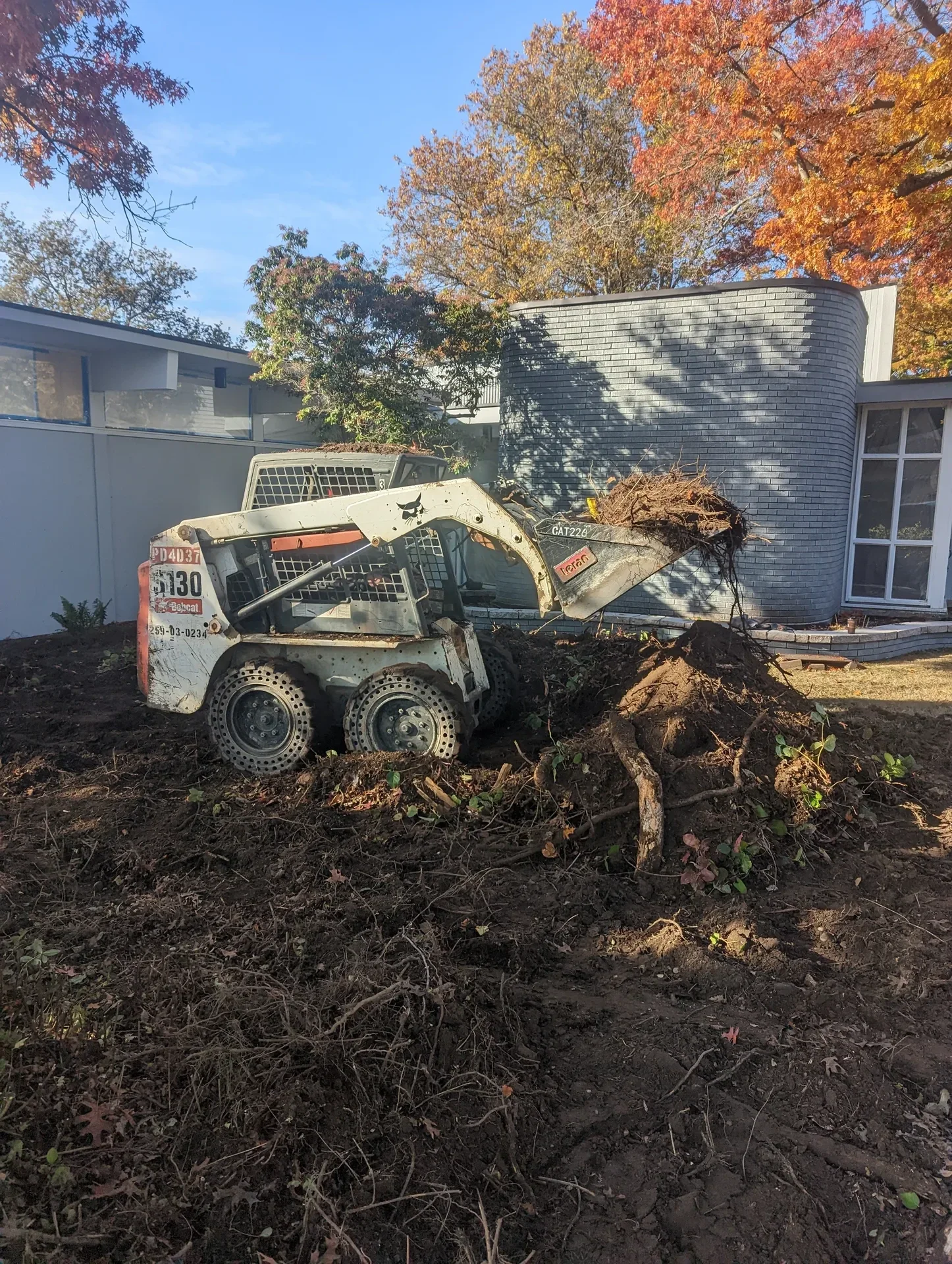
Site preparation is the part of a landscape nobody photographs and the part that decides whether everything above it survives. On a Seattle property it is frequently the largest single piece of work in a build.
Getting it wrong is not a cosmetic problem. A patio on an unprepared base moves. Planting into unamended clay sits in water. A wall built without drainage behind it leans. Every one of those is a rebuild rather than a repair.
What it covers
Grading. Setting the levels so water runs away from the house and toward somewhere it can go. This solves a surprising share of drainage complaints outright, before any pipe is laid.
Excavation. Digging out to the depth the finished surface needs, which is almost always deeper than people expect in clay.
Brush clearing. Blackberry, ivy and unmanaged growth off slopes, beds and access routes, with the crowns taken out rather than the tops cut.
Stripping and removal. Old lawn, failed surfaces, buried rubble and the previous owner’s landscape fabric.
Drainage groundwork. Lines, outlets and falls installed at the stage where the ground is already open, rather than retrofitted through a finished garden.
Access. Clearing and stabilising a route so material and equipment can reach the work area without damaging what is staying.
Where the spoil goes
Moving soil twice is expensive, so the plan for spoil is made before anything comes out of the ground. Some is reused on site where the grading can take it. The rest is hauled. Either way it is quoted rather than discovered.
Preparing for someone else
Not all of this work is ours to finish. We regularly strip and grade ahead of a builder, a fence contractor, a utility run or another landscape designer’s installation, and hand over a site that is ready rather than nearly ready.
Where we are also doing the build, site preparation runs as the first phase of design and build, with the drainage resolved while the ground is open.
Common questions
Why does site preparation need its own line?
Because it is frequently the largest single part of a job and the part nobody sees. Quoting it inside a patio price hides the real cost of the work.
Do you handle access for other trades?
Yes. Clearing and grading ahead of a builder, a fence contractor or a utility run is regular work for us.
What about the spoil?
Hauled off, or reused on site where the grading plan can take it. Moving soil twice is expensive, so we plan where it goes before it comes out.
Is a permit needed?
It depends on volume, slope and whether a critical area is involved, and King and Snohomish counties differ. We check before quoting.