
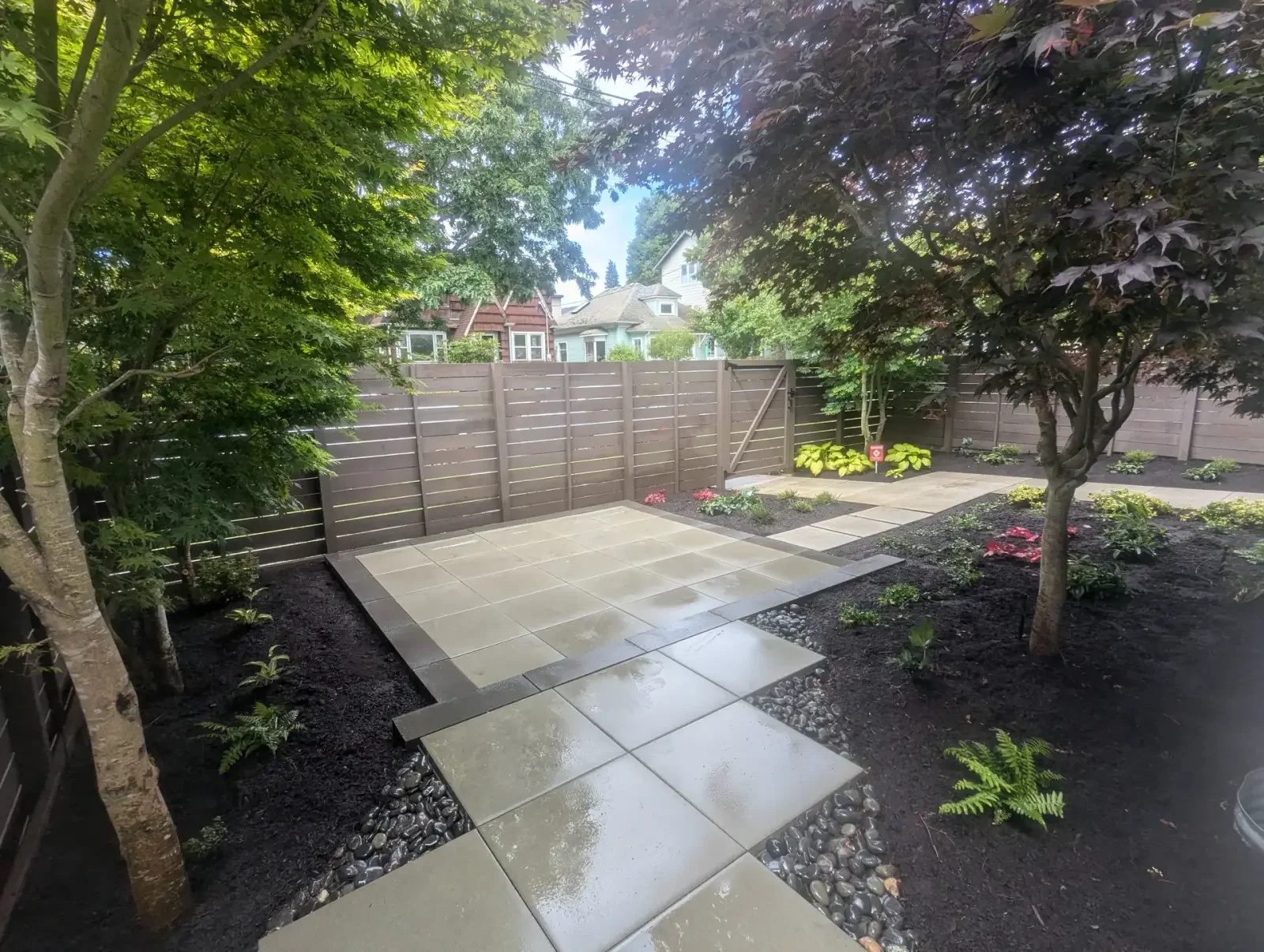
Bellevue properties are generally larger and considerably more exposed than the ones we work on across the lake. Less mature canopy, more open sky, and an August that is genuinely dry. That changes the planting list and it makes irrigation a first-order decision rather than an afterthought.
Sun and water
A west-facing Bellevue lawn in late summer is a different proposition from a Seattle back garden under fir. Without irrigation, turf goes dormant and beds struggle through the dry stretch. We plan irrigation zones by exposure rather than running one schedule across the property, because the shaded north side and the open front do not want the same water.
Xeriscaping and drought-tolerant planting are a genuine option here in a way they are not everywhere in the region, and on the larger lots they can take meaningful area out of the irrigation budget.
HOA covenants
Many Bellevue neighbourhoods carry covenants governing what can be planted, what can be built, fence heights and street-facing appearance. Getting a plan approved is part of the job. We scope with the covenant in hand where one applies, and we have worked through enough of them to know what tends to get pushed back on.
Larger properties, phased work
Bigger lots mean projects are frequently phased across seasons: site preparation and drainage first, structure next, planting last. That sequence keeps the work manageable and avoids running heavy equipment across new planting.
What we do here
Irrigation, planting plans built for exposure, patios and walls on the larger properties, and one-off cleanups and renovation work on residential and commercial grounds.
Our standing maintenance plans run in Seattle, Shoreline, Edmonds and Mountlake Terrace, so a Bellevue property is design, build and scheduled one-off work rather than a recurring visit.