
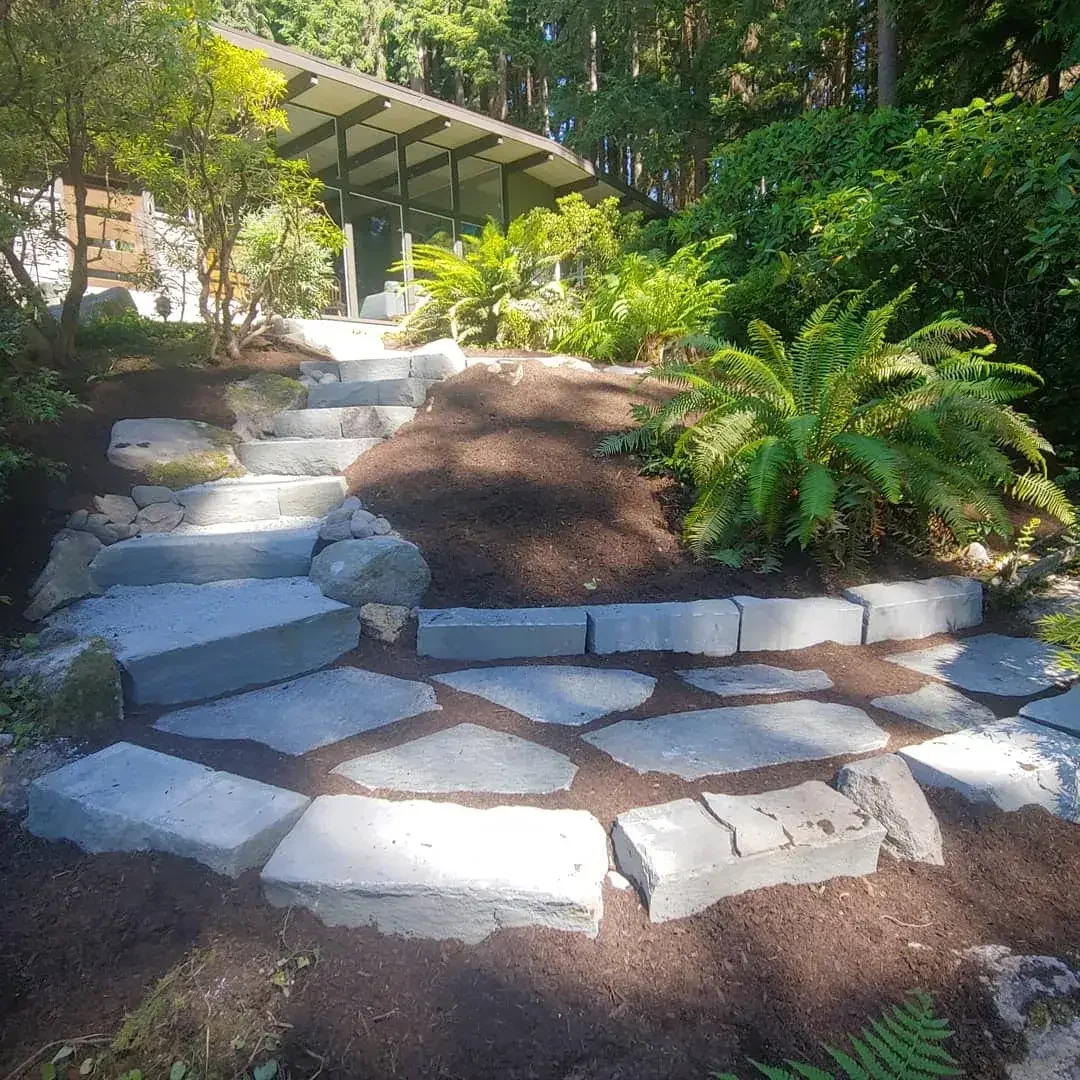
Lake Forest Park is one of the most heavily treed cities in King County, and every part of the landscape job here follows from that. Properties sit under a canopy that was mature decades ago. The ground falls toward the lake in ravines. Two creeks run through the middle of it. None of that is incidental, and a plan drawn without it in mind will not survive contact with the site.
We work right next door in Shoreline, so this is familiar ground rather than a new radius on a map.
The tree code, and why it matters before anything else
Lake Forest Park protects its trees seriously. Removal and significant pruning of regulated trees runs through the city, and the thresholds catch a lot of work people assume is routine. That includes trees that a contractor elsewhere would take down without a second thought to make room for a patio or a driveway turnaround.
We scope with that in mind from the first walk. Where a design depends on losing a tree, you will hear it early, along with what the alternative looks like if the permit does not come. Finding out halfway through a build is the expensive version of this conversation.
Building under a mature canopy
Deep shade for most of the year changes what will grow, and root competition near a large conifer makes some beds effectively unplantable at ground level without raising them.
What works here is shade-tolerant planting chosen for the light the bed will actually get rather than the light shown on a nursery label, raised beds where roots rule out digging, and hard surfaces placed to avoid cutting through a root plate. Needle and leaf fall runs most of the year under this canopy, which is why properties here want gutters twice a year rather than once, and why roof moss turns up faster than it does on an open lot.
Ravines, creeks and critical areas
Lyon Creek and McAleer Creek are salmon-bearing, and the buffers around them are regulated. Ravine slopes carry their own restrictions. Work near either one has a different scope and a different timeline from the same work on a flat lot two streets away.
Drainage is the recurring job. Water coming off a wooded slope moves fast and carries soil with it, and downspouts emptying beside a house on that grade are a problem waiting for a wet November. The fix is usually regrading, a drain run along the contour, and roof water tied into a buried line that discharges somewhere you chose.
What we do here
Drainage and erosion work on the ravine lots, retaining walls and terracing, stone steps and paths down a grade, shade planting under mature conifers, and seasonal cleanups built around a canopy that drops something in every month of the year.
Our standing maintenance plans run in Seattle, Shoreline, Edmonds and Mountlake Terrace. Lake Forest Park sits just outside that, so the work here is design, build and scheduled one-off jobs. If you are after a recurring plan, ask anyway and we will tell you straight whether we can take it on.