
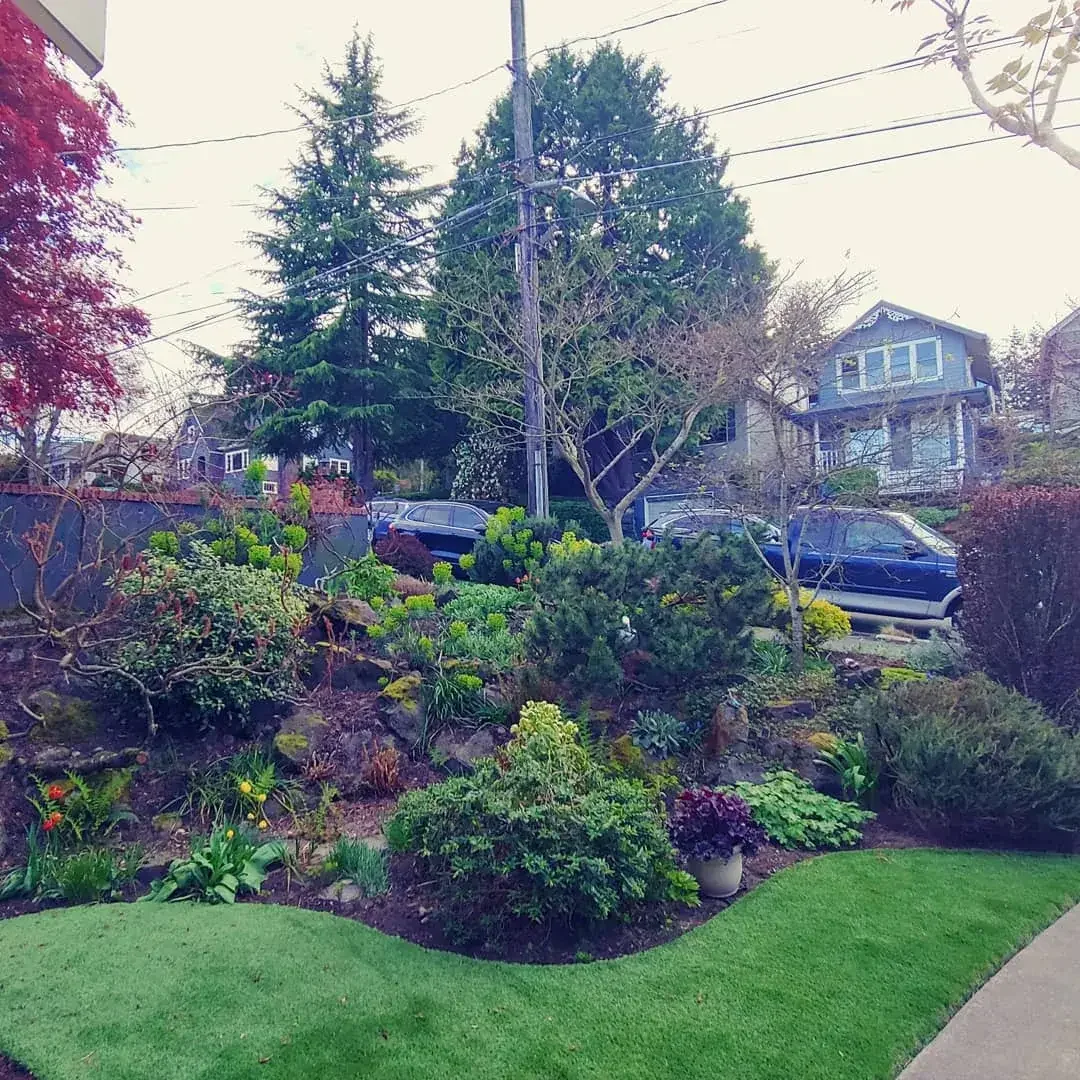
Magnolia has larger lots than most of Seattle, older gardens, and a bluff running along its western edge. Those three things shape nearly all of the work we do here.
Mature gardens that have outgrown themselves
A great many Magnolia properties were landscaped properly decades ago and have simply kept growing. The planting was right for the position at the time and is now twice the size it was designed to be. Laurel that has swallowed a path. Rhododendrons pressing against the house. A tree canopy that has turned a sunny bed into deep shade without anyone noticing it happen.
Renovating this is staged work rather than a single clearance. Cutting an overgrown evergreen hard in one go often leaves a bare face that never recovers, so the correction runs across two or three seasons. We will tell you which plants will take a hard cut and which will not.
The bluff
Properties toward the western edge sit above a genuine slope. Water moving off that grade takes soil with it, and the combination of a steep fall and saturated winter ground is what puts retaining walls out of plumb.
Terracing rather than one tall wall is usually the better build here: it holds the same grade, often stays below the height that triggers engineering, and gives you planting space between levels. Everything gets drainage behind it.
Bluff-adjacent parcels can carry additional restrictions on what may be built or removed. We check where a project sits against those before quoting it.
View lines
A meaningful part of design work in Magnolia is managing sight lines: keeping a view toward the Sound open while still screening a neighbouring house. That is a planting problem rather than a hardscape one, and it turns entirely on choosing species by mature height rather than by the size of the pot they arrive in.
What we do here
Staged renovation of mature planting, terracing and retaining walls on the slopes, drainage, and recurring maintenance for larger established gardens.