
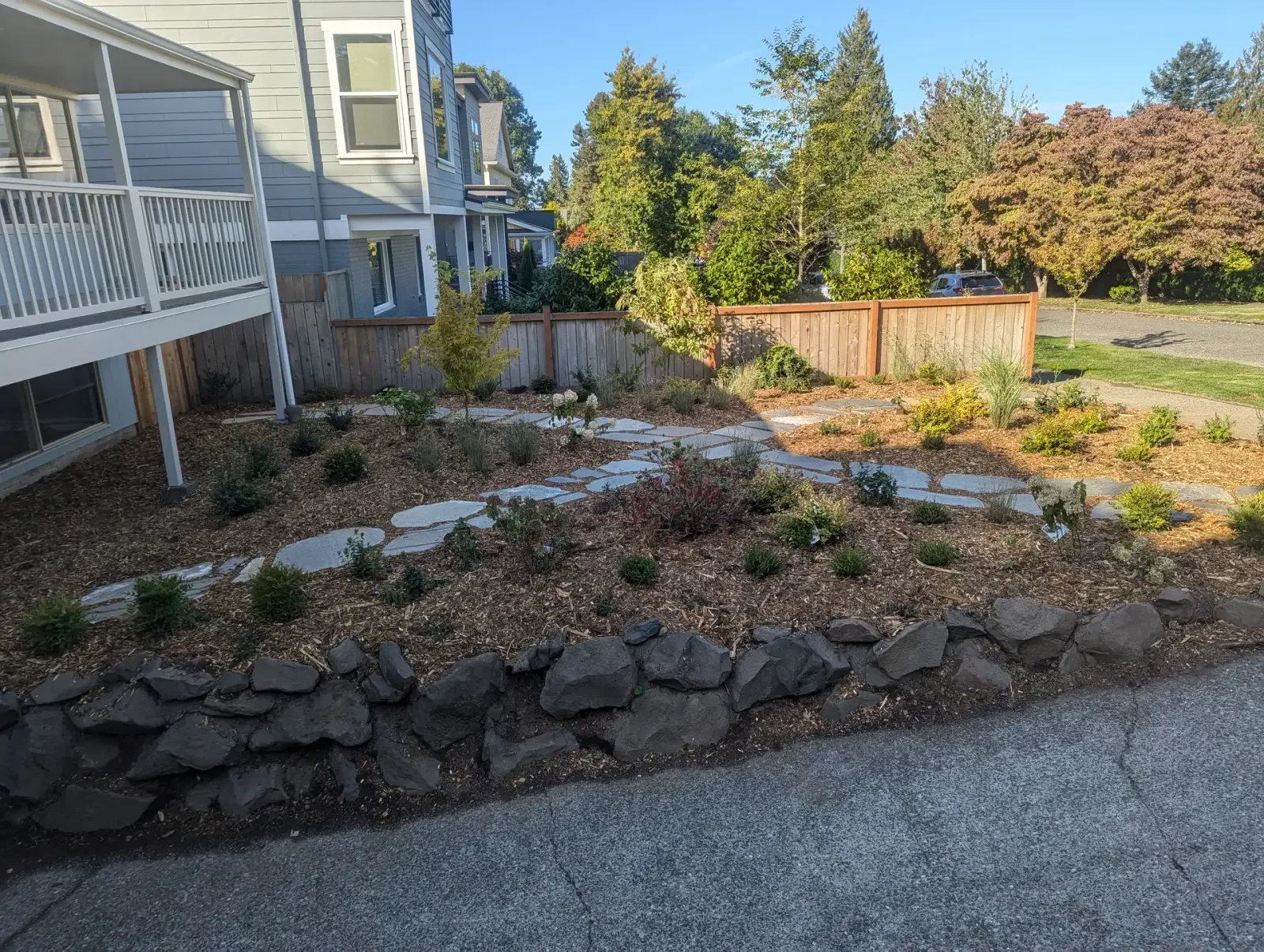
West Seattle is built on a hill and most of its streets run across the grade rather than along it. Almost every property we work on here falls in at least one direction, and a good number fall steeply.
Getting up and down the property
The most common request is simply making the garden usable. A back garden that drops six feet from the house is not a garden, it is a slope you look at. Stone or timber steps, a terrace cut into the grade, and a level area large enough to put a table on are what turn it into somewhere people go.
Rise and run matter enormously on a hillside property, because people use those steps every day. Steps that are slightly too tall or too shallow are felt on every trip and are the detail people notice for years without being able to name.
Walls and water
Retaining walls are the bulk of the construction work here, and water is what makes them fail. Soil saturated through a Puget Sound winter is dramatically heavier than drained soil and pushes far harder. Every wall gets drainage behind it, backfilled so water can move and outletted somewhere that actually takes it.
Above the walls, the grading has to send water somewhere deliberate. On a hillside, runoff you do not control becomes a neighbour’s problem downhill, and that is a conversation worth avoiding.
Alki and the exposed edge
Properties near Alki take wind and salt off the Sound, which narrows the plant list the same way it does on any exposed waterfront here. Further inland, around Delridge and High Point, the ground flattens and the problems shift toward drainage and heavier soil.
What we do here
Retaining walls and terracing, stone steps and hillside access, drainage, planting plans for sloped and exposed sites, and recurring maintenance on properties where a mower has to be carried down.